September 24, 2026
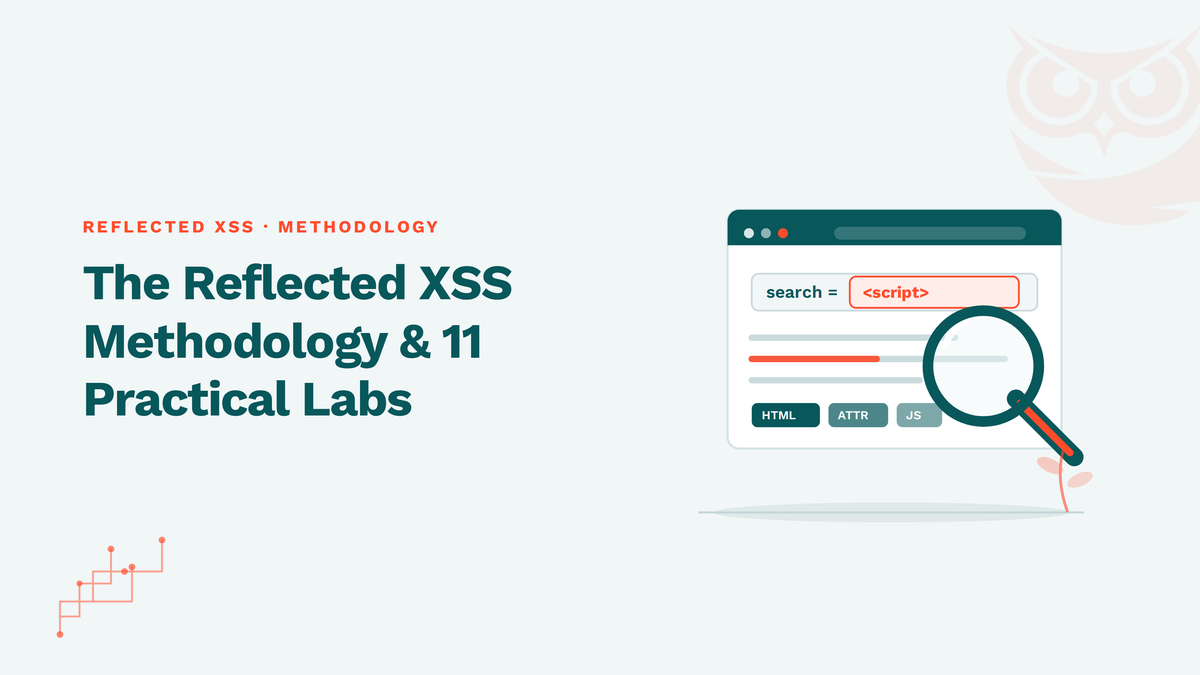
The Reflected XSS Methodology: 11 Labs Behind $5,000+ in Bounties and 80+ Pentests
The Reflected XSS Methodology: 11 Labs Behind $5,000+ in Bounties and 80+ Pentests

Salman Khan


Omair Manzoor is the Founder, CEO, and Chief Hacker of ioSENTRIX, a CREST-accredited cybersecurity firm. With 14+ years in offensive security, he has led penetration tests for Fortune 500 companies including engagements for Amazon, Bank of America, VISA, and the London Underground. His exploits are part of the Metasploit Framework and Immunity Canvas. Omair is a published researcher, conference keynote speaker (DOD, CISA, BSides), and technical reviewer for academic security textbooks.
Cybersecurity compliance is difficult for growing businesses because rapid expansion increases systems, data flows, and regulatory exposure faster than security maturity can keep pace.
Compliance obligations often expand before governance and standardized controls are fully established.
Growth introduces operational and technical complexity that exceeds the organization’s ability to consistently apply security policies across teams, environments, and technology stacks. This inconsistency weakens compliance posture.
As businesses adopt cloud platforms like AWS and Azure, SaaS tools such as Salesforce, and third-party APIs, compliance scope expands with each integration, increasing oversight and documentation requirements.
According to PwC, 43% of mid-sized businesses struggle to map security controls to regulatory requirements, resulting in fragmented evidence collection, audit challenges, and compliance blind spots.
Simplifying cybersecurity compliance requires prioritizing high-risk areas, automating control validation, and maintaining continuous visibility. Compliance programs must scale alongside business growth to remain effective.
Growing businesses often struggle with fragmented security tools, limited internal resources, and inconsistent control validation across environments.
These gaps delay compliance readiness and increase audit risk during regulatory assessments.
Common challenges include undocumented assets, inconsistent identity and access controls, and applications deployed without formal security testing or validation against compliance requirements.
Manual processes for evidence collection and control tracking increase operational overhead and audit risk as systems and regulatory obligations expand.
Verizon’s 2024 Data Breach Investigation Report shows that 74% of breaches involve human or process failures, directly linking operational gaps to compliance breakdowns.
Addressing these challenges requires structured compliance frameworks supported by automation, continuous security testing, and measurable control validation.
Growing businesses are commonly subject to frameworks such as SOC 2, ISO 27001, GDPR, HIPAA, and PCI DSS, depending on industry, geography, and customer requirements.
Technology companies pursuing enterprise customers are often required to achieve SOC 2 Type II, while organizations in healthcare and fintech face stricter regulatory and data protection mandates.
Although these frameworks emphasize governance, confidentiality, and availability, they do not guarantee real-world security effectiveness without continuous testing and validation.
A risk-based approach simplifies compliance by focusing resources on controls that mitigate the highest business-impact threats. Because not all controls carry equal risk, prioritization reduces unnecessary operational burden.
NIST SP 800-53 recommends selecting and implementing controls based on threat likelihood and potential impact, enabling organizations to apply security measures proportionate to actual risk exposure.
Risk-based compliance aligns security investment with business objectives, prevents overengineering low-impact controls, and enables faster audits, clearer reporting, and defensible compliance outcomes.
Continuous security monitoring simplifies compliance by providing real-time visibility into control effectiveness and detecting configuration drift. Unlike static audits, it identifies operational failures as they occur.
Continuous monitoring uncovers exposed assets, misconfigurations, and unauthorized changes that could invalidate compliance assertions if left undetected. This proactive approach strengthens security posture.
According to Gartner, organizations that implement continuous monitoring reduce audit preparation time by 40%, while automation further improves efficiency and ensures controls remain consistently effective.
Learn how this works in Continuous Security Monitoring with PTaaS.
Penetration Testing as a Service (PTaaS) reduces compliance complexity by replacing infrequent annual tests with continuous, repeatable validation. This approach aligns naturally with agile development practices.
PTaaS platforms assess applications, APIs, and cloud infrastructure throughout release cycles, ensuring security issues are identified early and addressed promptly.
Findings are mapped directly to compliance controls, providing audit-ready evidence with timestamps and remediation tracking, which reduces the need for manual documentation and improves operational efficiency.
Compliance integrates with DevSecOps by embedding security testing directly into CI/CD workflows. This approach prevents late-stage audit failures and ensures that security is built into the development process.
Automated testing validates controls during development rather than after deployment, allowing issues to be detected and resolved earlier, reducing risk exposure and operational delays.
See integration methods in How to Integrate PTaaS into DevSecOps.
AI increases compliance complexity because models exhibit non-deterministic behavior and introduce new attack vectors. Traditional compliance frameworks do not adequately address these AI-specific risks.
AI systems depend on training datasets, inference pipelines, and third-party models, with each component creating additional compliance exposure and regulatory considerations.
AI-enhanced security testing simplifies compliance by automatically identifying patterns and prioritizing the most exploitable risks, a process that manual testing cannot scale to handle effectively.
Machine learning-driven PTaaS platforms analyze thousands of attack paths across applications, APIs, and cloud infrastructure, improving the signal-to-noise ratio and highlighting critical vulnerabilities.
Compliance teams receive prioritized findings directly aligned with regulatory controls, enabling faster, data-driven decision-making and more efficient remediation planning.
Compare methodologies in AI-Enhanced PTaaS vs Traditional Penetration Testing.
Growing businesses must adopt scalable compliance models that account for emerging AI regulations and continuous assurance requirements.
Proactive planning ensures compliance keeps pace with technological and regulatory changes.
Continuous assurance platforms help reduce audit fatigue, minimize security debt, and provide ongoing visibility into control effectiveness, enabling businesses to maintain sustainable growth while meeting compliance obligations.
Growing businesses can simplify cybersecurity compliance by prioritizing high-risk areas, automating control validation, and implementing continuous security testing across all systems and workflows.
By integrating PTaaS, continuous monitoring, and AI-specific security controls, organizations transform compliance from a static requirement into an operational capability, ensuring that controls are actively validated.
This approach enables businesses to demonstrate trust continuously to customers, regulators, and stakeholders, rather than relying solely on periodic audits or certifications.
To assess your compliance maturity and reduce complexity, Contact Us.