






What is application security?
Application security (AppSec) is the discipline of protecting software applications from security threats by identifying and remediating vulnerabilities throughout the software development lifecycle — from design and coding through testing, deployment, and maintenance. AppSec encompasses multiple testing methodologies: static application security testing (SAST) analyzes source code without executing it, dynamic application security testing (DAST) tests running applications from the outside, and interactive application security testing (IAST) combines both approaches by instrumenting the application during runtime. Beyond testing, application security includes secure architecture review, threat modeling, secure coding practices, and integrating security gates into CI/CD pipelines. Organizations that implement AppSec programs typically reduce production vulnerabilities by 40–60% compared to those relying solely on pre-release penetration testing. ioSENTRIX delivers AppSec services that combine automated tooling with manual expert review by CREST-accredited consultants — ensuring that business logic flaws, authentication bypasses, and complex injection chains are caught alongside the common OWASP Top 10 weaknesses that scanners detect.
What is the difference between DAST, SAST, and IAST?
DAST (Dynamic Application Security Testing), SAST (Static Application Security Testing), and IAST (Interactive Application Security Testing) are three complementary approaches to finding vulnerabilities in software applications, each operating at a different stage of the development lifecycle. SAST scans source code, bytecode, or binaries without executing the application — it finds issues like SQL injection patterns, hardcoded credentials, and buffer overflows early in development, but produces higher false-positive rates because it cannot observe runtime behavior. DAST tests the running application from the outside by sending crafted HTTP requests — it finds issues like cross-site scripting (XSS), broken authentication, and server misconfigurations in staging or production, but cannot pinpoint the exact line of vulnerable code. IAST instruments the application at runtime to observe data flow from input to output — it combines the code-level visibility of SAST with the runtime context of DAST, producing fewer false positives while identifying the precise code location. ioSENTRIX recommends a layered approach: SAST in the IDE and CI pipeline for early detection, DAST against staging environments before release, and IAST for complex applications where data flow analysis is critical — supplemented by manual penetration testing to catch business logic flaws that no automated tool reliably detects.
How do you integrate security into the SDLC?
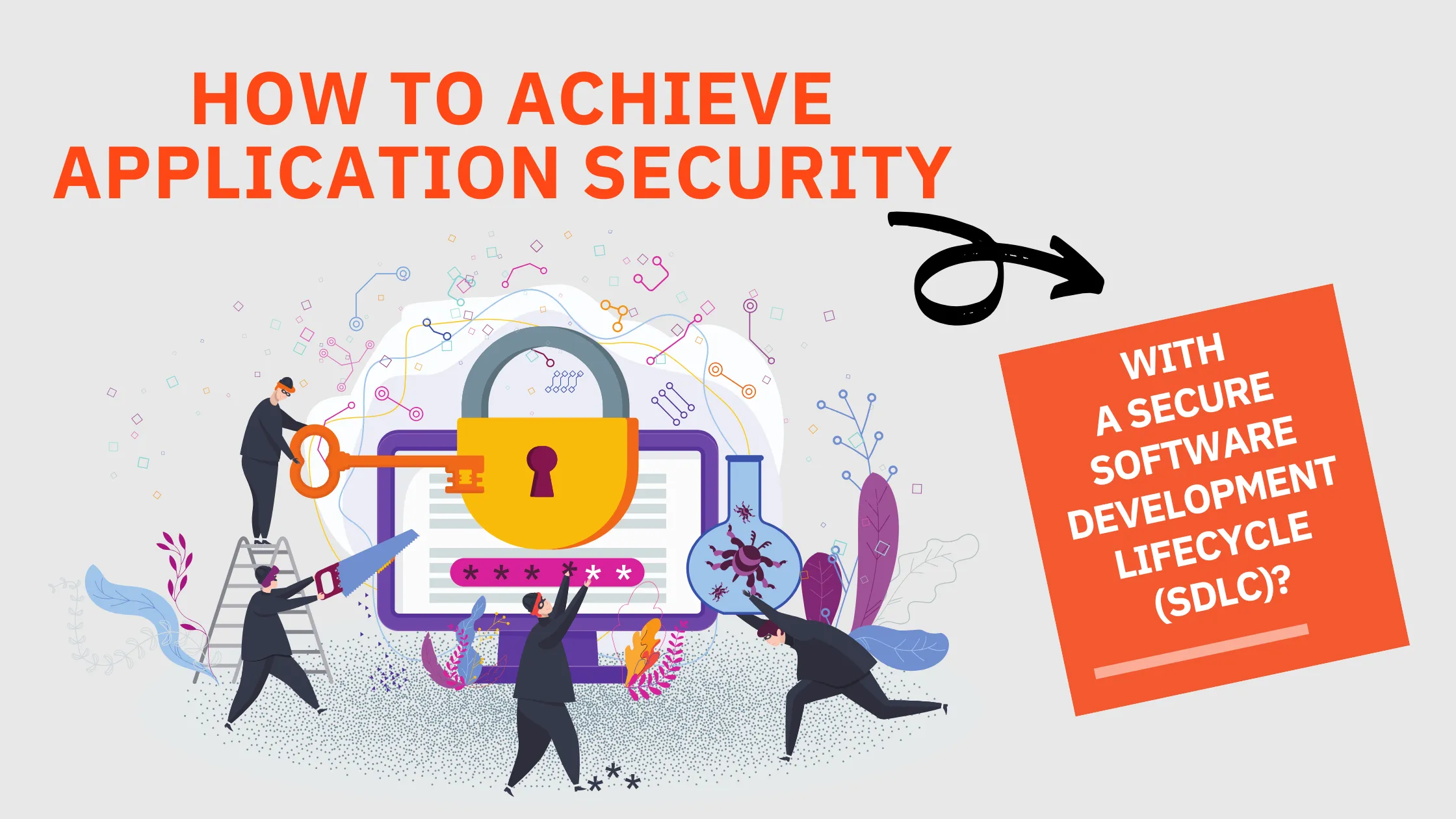
Integrating security into the SDLC (Software Development Lifecycle) means embedding security activities — threat modeling, secure coding, automated scanning, and penetration testing — at every phase of development rather than treating security as a final gate before release. A mature secure SDLC follows the "shift left" principle: security requirements are defined during planning, threat models are built during design, SAST scans run on every pull request in CI, DAST scans validate staging deployments in CD, and penetration testing validates the production release. The key integration points include pre-commit hooks that block hardcoded secrets, CI pipeline gates that fail builds on critical SAST findings, and automated DAST scans triggered on deployment to staging environments. ioSENTRIX helps organizations implement secure SDLC programs by assessing the current development workflow, recommending tool integrations (SonarQube, Checkmarx, Snyk, Semgrep), training developers on secure coding practices aligned with OWASP ASVS, and providing ongoing penetration testing through PTaaS that aligns with sprint and release cycles.
What is the OWASP Top 10?
The OWASP Top 10 is a regularly updated consensus document published by the Open Worldwide Application Security Project (OWASP) that ranks the ten most critical security risks to web applications based on prevalence, exploitability, and business impact. The 2021 edition — the most current as of 2026 — includes Broken Access Control (A01), Cryptographic Failures (A02), Injection (A03), Insecure Design (A04), Security Misconfiguration (A05), Vulnerable and Outdated Components (A06), Identification and Authentication Failures (A07), Software and Data Integrity Failures (A08), Security Logging and Monitoring Failures (A09), and Server-Side Request Forgery (A10). The OWASP Top 10 serves as a baseline for application security testing but is not exhaustive — it covers the most common risks, not all risks. ioSENTRIX tests against the full OWASP Top 10 as a minimum baseline in every application security engagement, then extends coverage to include business logic testing, API-specific risks from the OWASP API Security Top 10, and emerging threat categories like LLM prompt injection and AI model manipulation.
How much does an application security assessment cost?
An application security assessment typically costs between $5,000 and $30,000 depending on the scope, depth, and methodology. A DAST-only scan of a simple web application with 10–20 pages starts around $3,000–$5,000. A comprehensive assessment combining SAST source code review, DAST testing, and manual penetration testing for a medium-complexity application with authentication, role-based access, payment processing, and API integrations ranges from $10,000 to $25,000. Enterprise applications with microservices architectures, multiple API gateways, and mobile clients can exceed $30,000. Factors that influence cost include the number of user roles, API endpoints, third-party integrations, compliance requirements (PCI DSS, SOC 2, HIPAA), and whether retesting is included. ioSENTRIX provides application security assessments starting at $8,000 for standard web applications, with all engagements conducted by CREST-accredited consultants and including remediation guidance, compliance-mapped reporting, and one round of retesting to verify fixes.