September 24, 2026
The Reflected XSS Methodology: 11 Labs Behind $5,000+ in Bounties and 80+ Pentests
The Reflected XSS Methodology: 11 Labs Behind $5,000+ in Bounties and 80+ Pentests

Salman Khan


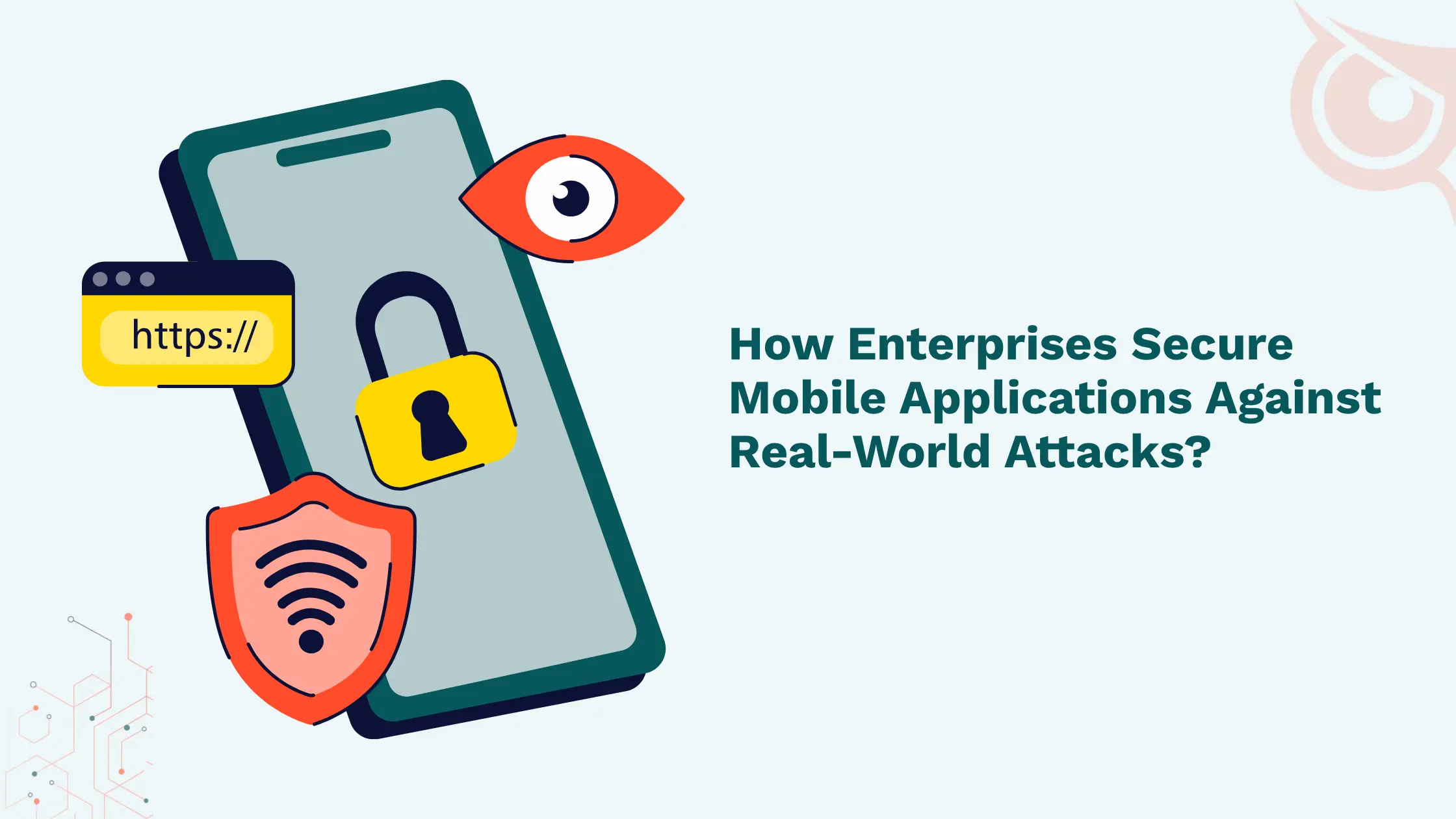
Enterprise mobile applications are high-value targets for cyberattacks because they handle corporate data, authentication, and transactions.
According to a 2025 Enterprise Strategy Group (ESG) report, 62% of mobile applications suffered a security breach in the past year, revealing a persistent gap between perceived and actual protection effectiveness.
Real-world threats include API abuse, reverse engineering, malware, and third-party vulnerabilities. Enterprises must secure mobile applications with strategies centered on prevention, detection, and continuous validation to mitigate financial, regulatory, and reputation risks.
Real-world attacks are active exploitation attempts targeting production mobile applications.
These attacks leverage exposed APIs, weak authentication, insecure storage, and third-party vulnerabilities.
Unlike theoretical risks, real-world attacks exploit misconfigurations and logic flaws already deployed. Enterprises require structured application security programs to defend against these threats.
Threat modeling identifies attack paths before attackers exploit them. It evaluates how adversaries could abuse APIs, authentication flows, and backend integrations.
Microsoft research shows threat modeling reduces critical vulnerabilities by over 70%. It provides visibility into abuse cases unique to mobile environments.
Strong authentication prevents unauthorized access and account takeover attacks. Mobile apps lacking MFA and secure session handling remain highly vulnerable.
According to Google, MFA blocks 99% of automated credential attacks. Biometrics and token-based authentication strengthen enterprise identity assurance. Authentication must align with backend access controls to prevent privilege escalation. This integration supports holistic application security.
Enterprises secure APIs to prevent unauthorized data access and abuse. APIs serve as the primary communication layer between mobile apps and backend systems.
OWASP reports API vulnerabilities are now among the top attack vectors in mobile breaches. Common issues include broken authorization and excessive data exposure.
API security improves through threat modeling, access control validation, and runtime monitoring. These practices reduce real-world exploitation risk.
Penetration testing validates whether attackers can exploit mobile applications. It simulates real-world attack techniques against production-like environments.
SANS Institute research shows organizations conducting regular testing reduce breach likelihood by over 60%. Testing identifies flaws missed by automated tools.
Secure coding prevents attackers from exploiting logic and implementation flaws. Hardcoded secrets, weak cryptography, and improper certificate validation remain common.
These flaws enable reverse engineering and man-in-the-middle attacks. Secure coding standards reduce defect density before deployment.
Enterprises enforce secure development training and automated scanning pipelines. Testing confirms secure coding effectiveness.
Learn why enterprises are shifting to PTaaS as the future of cybersecurity.
Enterprises secure mobile applications against real-world attacks through secure design, threat modeling, penetration testing, and continuous monitoring. A proactive, lifecycle-based AppSec strategy reduces breach impact, ensures compliance, and protects enterprise assets at scale.
To strengthen your mobile security posture, contact ioSENTRIX for expert guidance.
Mobile application security is critical for enterprises because mobile apps handle sensitive corporate data, authentication, and financial transactions. Weak security controls expose organizations to breaches, regulatory penalties, and reputational damage.
The most common real-world mobile app attacks include API abuse, reverse engineering, malware injection, insecure data storage exploitation, and credential theft. These attacks target vulnerabilities already present in production environments.
Threat modeling improves mobile application security by identifying potential attack paths during the design phase. It helps enterprises proactively address vulnerabilities in APIs, authentication systems, and backend integrations before deployment.
API security is essential because APIs act as the communication bridge between mobile apps and backend systems. Weak API security can lead to unauthorized data access, data leakage, and privilege escalation attacks.
Enterprises can prevent mobile app data breaches by implementing secure coding practices, multi-factor authentication (MFA), encryption, penetration testing, and continuous security monitoring throughout the application lifecycle.