September 24, 2026
The Reflected XSS Methodology: 11 Labs Behind $5,000+ in Bounties and 80+ Pentests
The Reflected XSS Methodology: 11 Labs Behind $5,000+ in Bounties and 80+ Pentests

Salman Khan


Omair Manzoor is the Founder, CEO, and Chief Hacker of ioSENTRIX, a CREST-accredited cybersecurity firm. With 14+ years in offensive security, he has led penetration tests for Fortune 500 companies including engagements for Amazon, Bank of America, VISA, and the London Underground. His exploits are part of the Metasploit Framework and Immunity Canvas. Omair is a published researcher, conference keynote speaker (DOD, CISA, BSides), and technical reviewer for academic security textbooks.
Cybersecurity audits have become a standard requirement for SaaS companies selling to enterprises. Customers, regulators, and partners increasingly expect objective proof that security controls work as intended.
This guide explains the most critical cybersecurity audits SaaS companies must prepare for and how to approach them effectively.
Cybersecurity audits validate whether a SaaS company can protect customer data at scale.
They reduce vendor risk, support regulatory compliance, and accelerate enterprise sales cycles.
According to the Cloud Security Alliance, over 70% of enterprise buyers require third-party security assurance before onboarding SaaS vendors. Audit readiness directly impacts revenue, trust, and market access.
SaaS audits focus on operational security in dynamic, cloud-based environments. Controls must function continuously, not only at audit time.
SaaS platforms rely on shared cloud infrastructure, frequent deployments, APIs, and third-party services. Audits therefore evaluate security monitoring, change management, and incident response under real operating conditions.
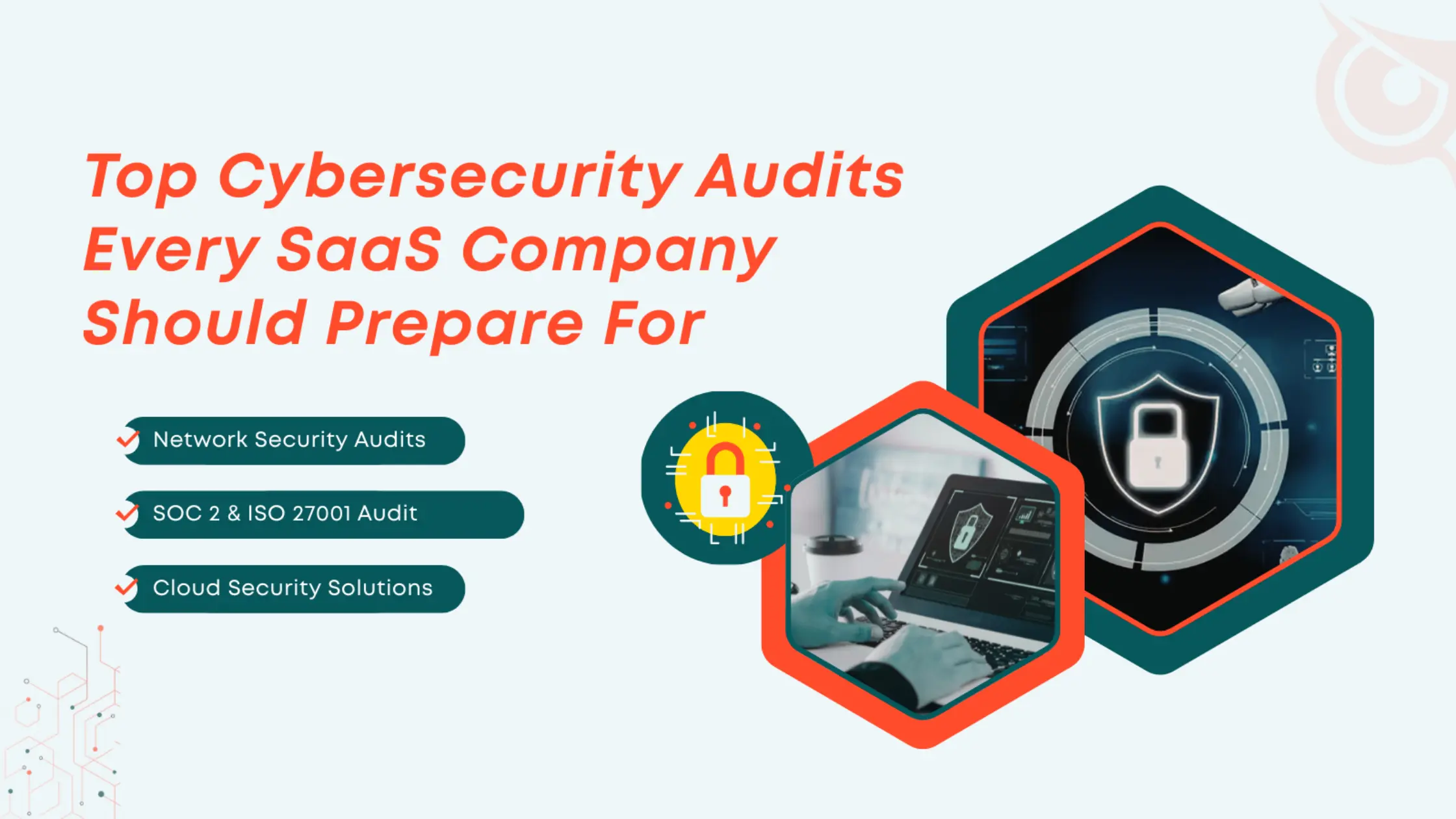
Most SaaS companies face 6 core cybersecurity audits. Each audit addresses a specific trust, regulatory, or customer expectation.
.webp)
Continuous testing supports audit expectations described in Penetration Testing for SOC Compliance
Secure development alignment is explained in Phases of SDLC for Startups
Audit preparation is continuous, not annual. Most audit failures occur due to control drift between assessments.
Auditors prioritize technical evidence over policy documentation. Evidence must demonstrate that controls operate consistently.
Common evidence includes:
Evidence must be current and traceable to controls.
ioSENTRIX enables continuous security validation aligned with SaaS audit requirements.
Its approach supports SOC 2, ISO 27001, cloud security, and penetration testing.
By validating controls continuously, ioSentrix helps SaaS companies remain audit-ready year-round without last-minute remediation.
Cybersecurity audits are now a core SaaS business requirement. Preparation requires continuous security validation, not reactive compliance efforts.
Prepare your SaaS platform for cybersecurity audits with ioSentrix. Contact ioSENTRIX to assess your audit readiness.
The most important cybersecurity audits for SaaS companies include SOC 2 audits, ISO 27001 certification, cloud security configuration audits, network security audits, penetration testing, and secure SDLC audits. These audits help validate security controls, ensure compliance, and build trust with enterprise customers.
SaaS companies need SOC 2 and ISO 27001 audits to demonstrate that their security controls are effective and aligned with industry standards. These certifications are often required by enterprise buyers and help accelerate sales cycles by reducing vendor risk and proving compliance.
SaaS companies should treat cybersecurity audits as a continuous process rather than a one-time activity. While SOC 2 audits typically cover a 12-month period and ISO 27001 requires ongoing surveillance, activities like penetration testing and cloud security audits should be performed regularly or after major system changes.
Penetration testing plays a critical role in SaaS audit readiness by simulating real-world cyberattacks to identify exploitable vulnerabilities. It not only helps discover security gaps but also demonstrates remediation efforts, which is essential for passing audits like SOC 2 and ISO 27001.
SaaS companies can prepare effectively by implementing continuous security monitoring, maintaining audit-ready evidence, and integrating security into development through a secure SDLC approach.