
September 24, 2026
The Reflected XSS Methodology: 11 Labs Behind $5,000+ in Bounties and 80+ Pentests
The Reflected XSS Methodology: 11 Labs Behind $5,000+ in Bounties and 80+ Pentests

Salman Khan


Fiza Nadeem is an SEO content writer at ioSENTRIX with 2.5+ years of experience in content writing, copywriting, and SEO.
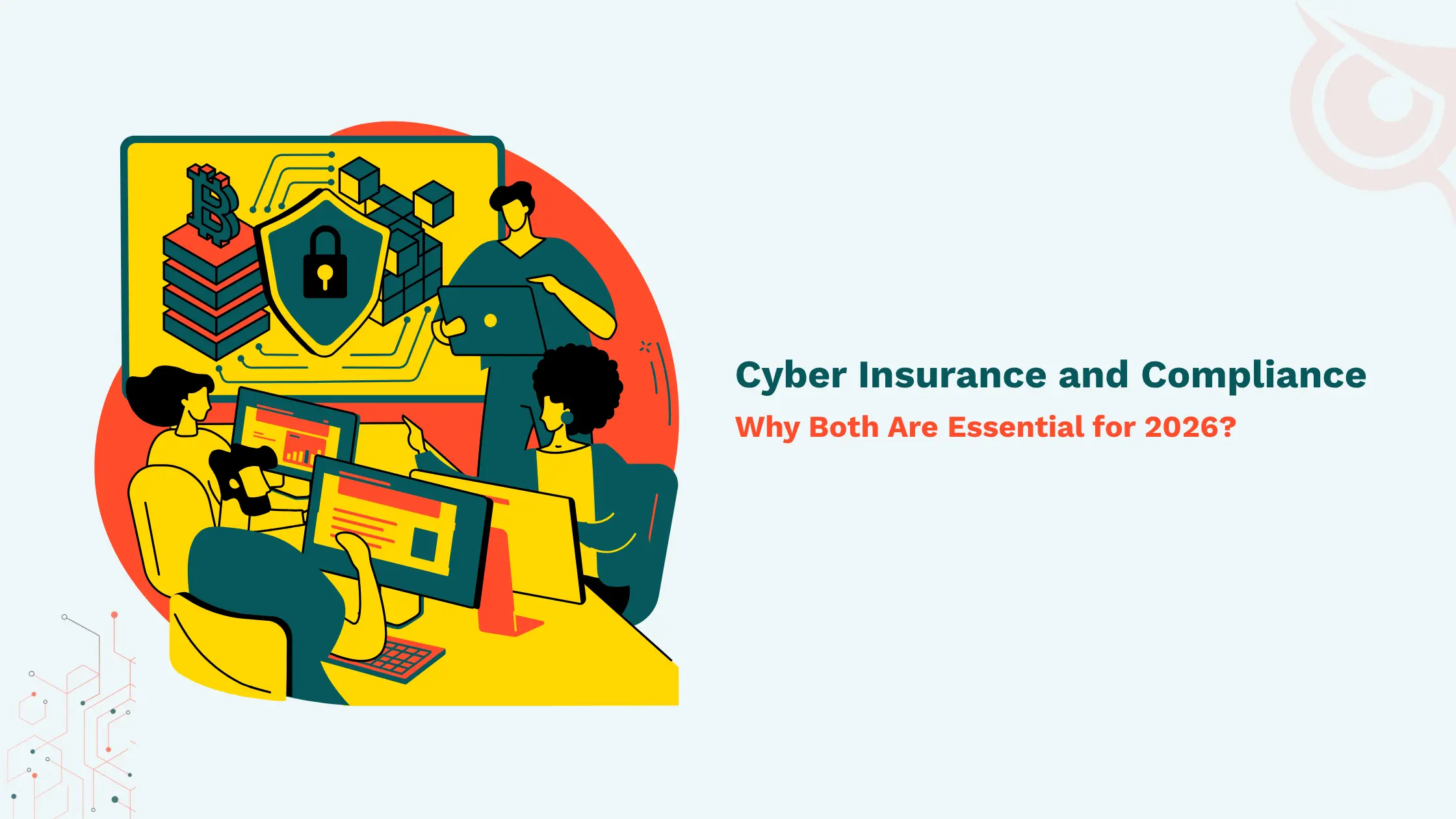
Cyber insurance and compliance are inseparable because insurers now require verified security controls.
According to a 2024 Marsh McLennan report, 72% of cyber insurance claims faced reduced payouts or denial due to unmet security or compliance requirements, highlighting the growing dependency between compliance maturity and insurability.
Organizations entering 2026 face tighter underwriting, higher premiums, and stricter evidence demands. Compliance is no longer optional documentation; it directly determines insurance eligibility and coverage limits.
Cyber insurance is a financial risk-transfer mechanism that depends on security and compliance validation.
Modern cyber insurance policies cover costs related to data breaches, ransomware incidents, business interruption, and legal response.
However, insurers increasingly mandate proof of controls aligned with frameworks such as SOC 2, ISO 27001, PCI DSS, and HIPAA. Policies now include exclusions for unmanaged risk, misrepresentation, and control failure.
Compliance has become a prerequisite because insurers assess regulatory alignment as a risk indicator.
Underwriters evaluate whether organizations implement documented controls, continuous monitoring, and third-party risk management.
Commonly assessed compliance frameworks include:
Organizations lacking formal compliance face premium increases, reduced coverage, or outright denial.
Cyber insurance does not cover preventable incidents caused by compliance failures. Most policies exclude losses resulting from missing controls, delayed patching, or misconfigured access.
These exclusions commonly apply to:
Organizations processing card payments must align with PCI DSS, while healthcare entities must meet HIPAA security requirements to avoid coverage disputes.
Recent breach claims demonstrate that insurers deny coverage when compliance evidence is missing. Post-incident investigations increasingly reveal that insured organizations failed to maintain baseline controls.
Claims are often rejected due to incomplete risk assessments, outdated policies, or undocumented access controls. These findings align with regulatory enforcement actions, compounding financial exposure.
Compliance documentation now serves as both regulatory evidence and insurance defense.
.webp)
Compliance validation is critical because insurers require objective proof, not policy statements. Underwriters demand penetration testing reports, risk assessments, and audit artifacts.
Validation mechanisms typically include:
Organizations preparing for audits, renewals, or acquisitions benefit from compliance-driven readiness assessments such as merger and acquisition security solutions.
Cyber insurance influences security investment by prioritizing insurable controls. Insurers incentivize investments in identity management, logging, endpoint protection, and incident response.
This alignment shifts security budgets toward measurable risk reduction rather than ad-hoc tooling. Compliance frameworks provide the structure insurers trust when evaluating these investments.
Cyber insurance strategies aligned with compliance reduce friction during underwriting and claims.
Third-party risk is a major underwriting concern due to supply chain exposure.
According to Gartner, 45% of global organizations will experience third-party-related security incidents by 2025, increasing insurer scrutiny.
Insurers expect organizations to assess vendors, cloud providers, and partners against compliance benchmarks. Structured evaluations reduce inherited risk and improve coverage outcomes.
Industry-specific regulations directly influence policy terms and exclusions. Highly regulated sectors face stricter underwriting due to elevated breach impact.
Examples include:
Failure to meet sector-specific compliance often results in limited policy scope or higher deductibles.
ISO 27001 is central because it demonstrates systematic risk management. Insurers view ISO 27001 as evidence of governance maturity, continuous improvement, and accountability.
Organizations certified under ISO 27001 typically experience smoother underwriting and more favorable premium structures. The framework’s emphasis on risk treatment aligns directly with insurer loss prevention models.
AI-driven systems introduce new compliance and insurance risks. Organizations deploying machine learning models and large language models must address data integrity, access control, and explainability.
Insurers increasingly assess AI governance as part of risk evaluation. Poorly governed AI increases exposure to regulatory fines and operational failures.
Organizations must integrate compliance and insurance into a unified risk strategy. Siloed approaches create gaps that insurers and regulators quickly identify.
Key actions include:
Organizations seeking structured support can explore cyber insurance solutions.
2026 will demand a compliance-first mindset due to stricter regulations and underwriting models. Insurers are transitioning from loss reimbursement to risk prevention partnerships.
Organizations unable to demonstrate continuous compliance will face coverage restrictions, premium inflation, or market exclusion. Compliance maturity becomes a competitive differentiator.
Cyber insurance without compliance is financially unreliable, and compliance without insurance leaves residual risk. Recent claim trends confirm that both elements must operate together to protect modern organizations.
By aligning regulatory compliance, security validation, and insurance strategy, organizations reduce uncertainty and improve resilience. ioSENTRIX helps organizations achieve this alignment through structured, evidence-based security programs.
Learn how ioSENTRIX can help you align compliance and cyber insurance for 2026. Visit ioSENTRIX to get started.
Compliance is required because insurers now demand verified security controls before issuing or honoring policies. Without frameworks like SOC 2 or ISO 27001 in place, organizations risk higher premiums, reduced coverage, or claim denial.
Cyber insurance typically covers financial losses from data breaches, ransomware attacks, business interruption, legal costs, and incident response. However, coverage is often limited if required security controls are not properly implemented or maintained.
Yes, claims can be denied if an organization fails to meet compliance or security requirements. Missing controls, poor documentation, or delayed patching are common reasons insurers reject claims.
Key frameworks include ISO 27001, SOC 2, PCI DSS, and HIPAA. These frameworks demonstrate structured security practices and are commonly used by insurers to evaluate organizational risk.
Organizations can improve eligibility by implementing continuous compliance programs, conducting regular risk assessments, maintaining audit-ready documentation, and aligning security controls with insurer expectations.