
September 24, 2026
The Reflected XSS Methodology: 11 Labs Behind $5,000+ in Bounties and 80+ Pentests
The Reflected XSS Methodology: 11 Labs Behind $5,000+ in Bounties and 80+ Pentests

Salman Khan


Fiza Nadeem is an SEO content writer at ioSENTRIX with 2.5+ years of experience in content writing, copywriting, and SEO.
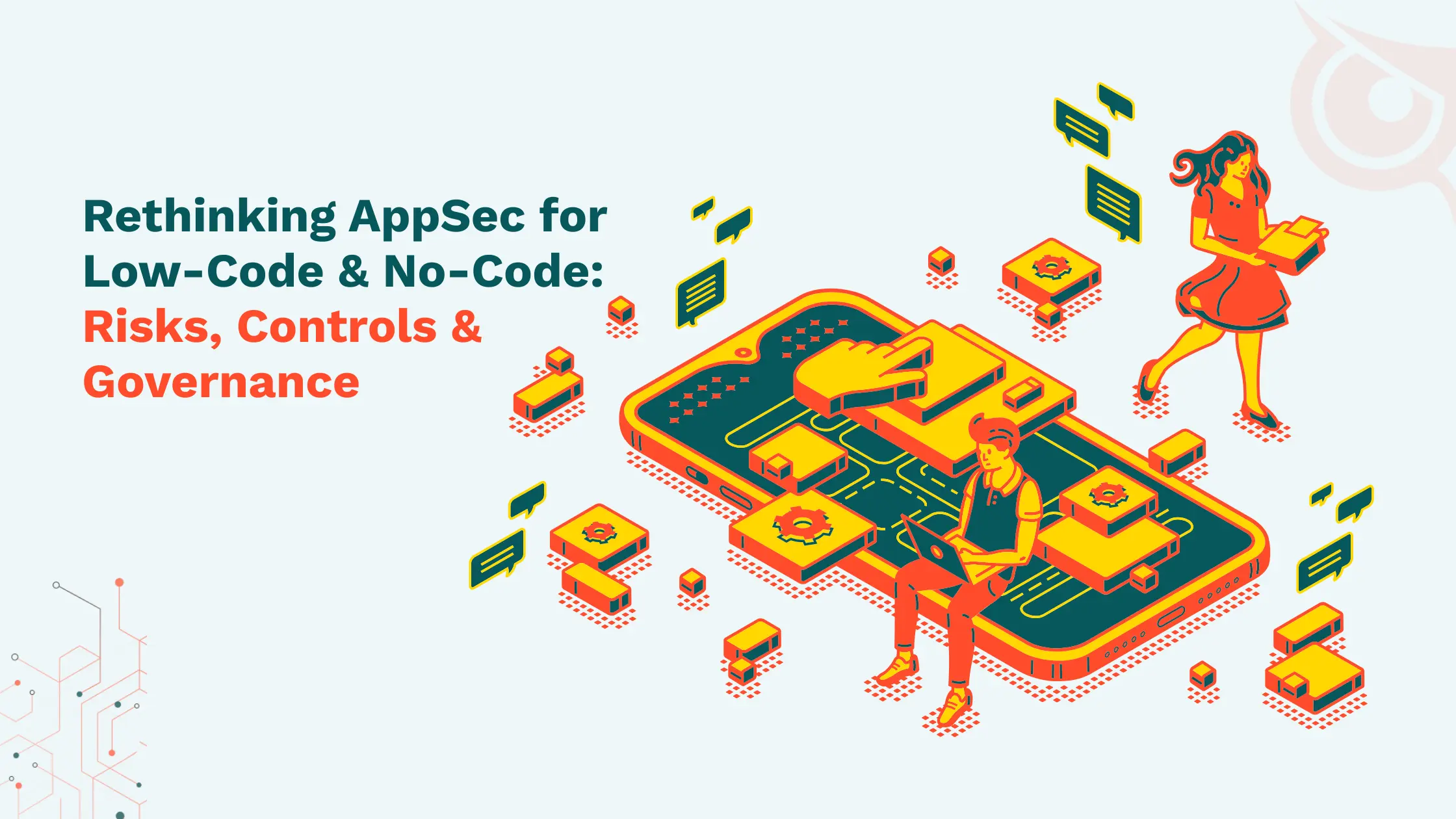
Low-code and no-code platforms are changing the way organizations build applications. Tools like Microsoft Power Apps, Mendix, OutSystems, Airtable, Zapier, and AppSheet allow teams to create solutions within days instead of months.
This speed is valuable, but it also brings new security challenges that most organizations are not prepared for. As more non-technical teams begin developing applications, the traditional approach to application security no longer fits the reality of how software is being built.
This article outlines the real risks companies face today, the shifts in governance and ownership, the controls needed, and practical ways security teams can protect LCNC environments without blocking innovation.
Low-code and no-code adoption has grown rapidly because organizations want faster delivery and reduced dependency on IT. Analysts estimate that LCNC will be part of most new enterprise applications within the next few years.
Much of this development will be done by “citizen developers,” meaning employees with no formal software engineering background.
While this helps reduce bottlenecks, it also means that applications are being built by people who may not understand basic security principles.
The impact of this shift is already visible. Several companies have unintentionally exposed sensitive employee or customer information because a form, a workflow, or a connector in a low-code tool was misconfigured.
A well-known example occurred when multiple organizations using Microsoft Power Apps left internal data publicly accessible due to incorrect privacy settings.
Low-code and no-code platforms simplify development by abstracting away most of the underlying code.
Instead of writing logic, developers drag, drop, and configure components. This creates fast results, but it also hides the internal workings of the application.
Traditional AppSec processes rely on code reviews, static analysis, dynamic testing, and development pipelines.
These practices are difficult or impossible to implement when the application is primarily visual rather than code-based.
As a result, security teams often lack visibility into how these applications function, how data moves between systems, and which external services are connected.
Workflows may interact with internal APIs, SaaS systems, or third-party services without proper oversight.
The lack of transparency makes it hard to assess security posture using traditional methods.
This forces organizations to adopt new approaches focused on configurations, access, data flows, and platform-level controls rather than code-level analysis.
In the LCNC environment, security responsibility shifts across multiple groups.
The citizen developer becomes the creator of the application. They decide what data the app will handle, which systems it will connect to, and how the workflow will behave.
However, most citizen developers are not familiar with threat modeling, input validation, secure authentication, or data privacy rules.
The IT or platform administration team determines who can build applications, which connectors are allowed, how data can flow between services, and what usage is monitored.
They effectively act as the gatekeepers of the platform and are responsible for setting the foundation on which developers operate.
The security team must then define governance policies, establish review processes, and implement monitoring.
They cannot rely on traditional AppSec checks, so they must create new frameworks that assess the risks associated with permissions, platform configurations, data sensitivity, and the connectors used in workflows.
Finally, the LCNC vendor itself is responsible for platform security. The provider manages hosting, patching, encryption, and the security of the underlying infrastructure.
This shared responsibility model only works if each party understands its role. Without clear ownership, gaps arise that attackers can exploit.
The most common risk in LCNC development is data exposure caused by misconfigurations. Many platforms make it easy to accidentally share an application or data source publicly.
Citizen developers may not recognize the difference between “internal,” “private,” and “public” sharing settings, and this lack of clarity leads to unintentional leaks.
This is one of the reasons Power Apps misconfigurations became a widely reported issue in the past.
Many LCNC applications are shared too broadly across the organization, exposing confidential HR or finance information to employees who should not have access.
Because the sharing process is simple, users often choose the easiest option rather than the most secure one.
.webp)
Many platforms allow users to integrate with external APIs or SaaS tools that have not been evaluated by the security team.
Some connectors collect analytics, store logs improperly, or transmit sensitive data through insecure channels.
When a citizen developer selects a connector, they often see only the functionality, not the security impact.
In traditional development, security teams analyze logic to identify vulnerabilities. In LCNC, logic is created visually, making it harder to review. A misconfigured workflow can unintentionally bypass critical validation or approval steps.
Organizations have already experienced issues where financial workflows auto-approved transactions or where HR processes skipped verification steps.
Finally, compliance becomes difficult because LCNC apps can store or transmit data in regions that violate regulatory requirements.
If data moves across borders through an external connector, the organization may be unaware until an audit uncovers the problem.
The most effective way to secure LCNC development is to build guardrails rather than rely on manual reviews.
Preventive controls should enforce secure defaults, such as requiring authentication for all published applications, limiting who can build apps, and restricting which connectors are available to users.
Instead of letting every employee begin with a blank canvas, organizations should provide pre-approved templates that follow best practices for handling sensitive data.
Detective controls help identify unusual behavior. Logging must be enabled for all actions, including data exports, connector usage, and changes to workflows.
Integrating LCNC logs with a SIEM makes it easier to detect suspicious activity, such as an app suddenly transferring large amounts of data or connecting to an unapproved endpoint.
Corrective controls ensure the organization can quickly fix issues when something goes wrong. LCNC platforms should offer version history and rollback features so teams can revert misconfigured apps.
High-risk workflows should require approval before deployment, especially those involving finance, HR, or customer data.
Traditional AppSec tools like static analysis or dynamic testing are ineffective with LCNC because there is no source code to review and limited endpoints to test.
Organizations must instead focus on reviewing configurations, data flows, access policies, and platform settings.
Some LCNC platforms now provide automated configuration scanning to detect excessive permissions, insecure sharing, or risky connectors.
Compliance requirements still apply even when development happens through drag-and-drop interfaces.
Organizations must classify the data each app handles and define whether it contains public, internal, sensitive, or highly sensitive information.
Apps that handle financial, healthcare, or personal data should be subject to additional review and tighter access control.
Data residency is another critical concern. Many LCNC connectors route data through cloud services in other regions, which may violate local laws.
Before allowing users to build apps, administrators must define approved regions and ensure the platform respects those boundaries.
Auditability is essential for regulatory compliance. The platform must offer a clear record of changes, access actions, data transfers, and workflow triggers.
Without these logs, it becomes difficult to prove compliance during internal or external audits.
Organizations should establish clear policies describing:
These policies help citizen developers make safer decisions without needing deep technical knowledge.
Use this as a simple reference for securing your low-code/no-code environment.
Governance
Platform Setup
Data Controls
Review & Monitoring
Organizations that succeed in the LCNC era will be the ones that combine governance, platform hardening, continuous monitoring, and strong data protection controls.
When these elements work together, LCNC can become a powerful, secure engine for digital transformation.
If your organization is adopting Microsoft Power Apps, AppSheet, Mendix, OutSystems, or any other LCNC platform, now is the time to put the right security foundations in place.
ioSENTRIX specializes in securing modern application ecosystems. Our experts help you:
Talk to security expert today to build a safer, compliant, and scalable LCNC ecosystem for your business.