September 24, 2026
The Reflected XSS Methodology: 11 Labs Behind $5,000+ in Bounties and 80+ Pentests
The Reflected XSS Methodology: 11 Labs Behind $5,000+ in Bounties and 80+ Pentests

Salman Khan


Fiza Nadeem is an SEO content writer at ioSENTRIX with 2.5+ years of experience in content writing, copywriting, and SEO.
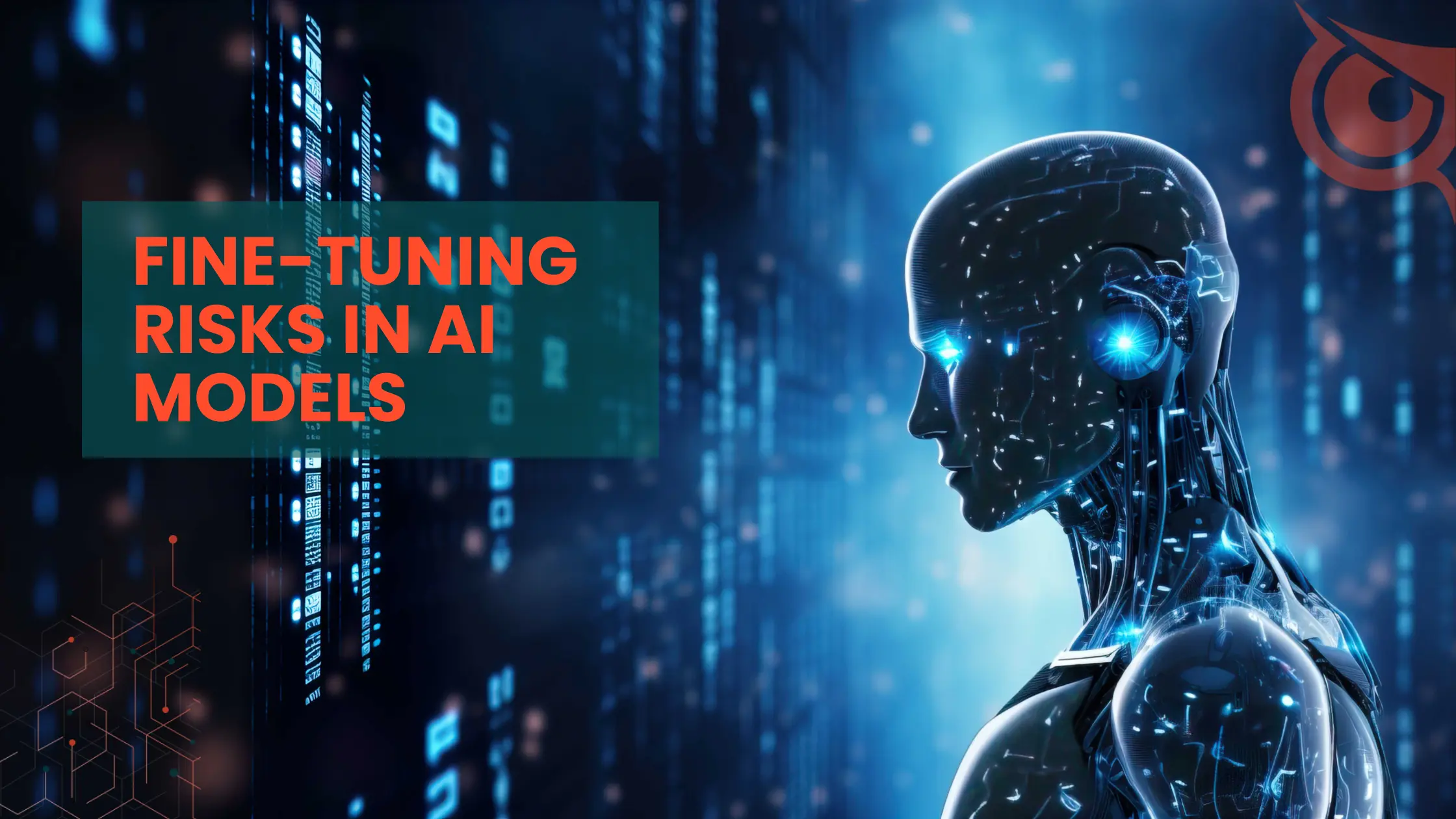
Fine-tuning AI models improves performance on domain-specific tasks. However, it introduces risks, including unintended data leakage that can expose sensitive information.
IBM’s 2024 Cost of a Data Breach Report estimates the average breach cost at USD 4.45 million, highlighting the financial impact of weak data protection.
This article explains why fine-tuning risks matter, how data leaks occur, and how PTaaS-driven security practices, including ioSENTRIX solutions, prevent AI data exposure.
Data leakage occurs when sensitive or unintended data is exposed through model outputs or training processes.
During fine-tuning, private datasets can influence model behavior, allowing reconstruction or inference of original data. This creates confidentiality and compliance risks.
Common causes include:
Example: A fine-tuned customer support LLM trained on internal emails may reveal proprietary content when responding to queries.
Base models train on large public datasets. Fine-tuned models directly incorporate private data, increasing the likelihood of memorization and unintentional disclosure.
This distinction amplifies the importance of security controls for fine-tuning workflows.
Data leaks can compromise confidentiality, expose regulated data, and create legal liabilities, especially for mid-market companies without mature AI security programs.
1. Confidentiality Breach: Generative models can reproduce fragments of training data. This leakage undermines commitments to customers and partners.
2. Regulatory and Legal Exposure: Leaked data may violate GDPR or CCPA. GDPR fines can reach €20 million or 4% of global revenue. Companies without dedicated compliance teams face higher exposure.
3. Brand and Trust Damage: AI data leaks erode trust. Studies show 70% of customers stop doing business with firms after breaches.
4. Intellectual Property (IP) Exposure: Fine-tuned models trained on proprietary code or product plans can expose IP to competitors through crafted prompts, impacting competitive advantage.
Remove or mask PII, financial records, health data, and proprietary statements. Automated tools can identify and sanitize sensitive patterns.
Introduce controlled noise to limit individual record influence, reducing the risk of data reconstruction.
Apply role-based access control (RBAC). Separate development, testing, and production infrastructure to prevent unauthorized exposure.
.webp)
Filter model outputs to detect sensitive content before delivery.
Continuously audit outputs for patterns resembling training data. Monitoring helps detect leaks early.
Use encrypted storage and secure compute instances. Isolate workflows following Network Security best practices.
Fine-tuning AI models introduces real risks of data leakage, regulatory penalties, IP exposure, and brand damage.
Effective mitigation requires systematic data sanitization, privacy-preserving techniques, access controls, and continuous monitoring.
ioSENTRIX provides PTaaS-driven solutions to protect AI models and align development with compliance goals.
Data leakage in fine-tuned AI models occurs when sensitive or private training data is unintentionally exposed through model outputs, inference behavior, or access paths. This often happens when fine-tuning datasets contain identifiable records or proprietary information that the model memorizes and later reproduces in responses.
Fine-tuning increases data leakage risk because it directly incorporates private or internal datasets into the model. Unlike base models trained on large public corpora, fine-tuned models are more prone to memorization and inference attacks, making sensitive data easier to extract through crafted prompts.
Yes. Fine-tuned AI models can leak regulated data such as PII, financial records, healthcare information, or proprietary source code if proper sanitization and access controls are not applied. Such leaks may trigger GDPR, CCPA, or contractual violations and expose organizations to regulatory penalties and legal action.
Organizations can prevent data leakage by sanitizing training datasets, applying differential privacy techniques, enforcing role-based access controls, filtering model outputs, and continuously monitoring model behavior. Ongoing security validation through PTaaS helps identify leakage risks before they lead to incidents.
Yes. AI-focused penetration testing simulates prompt injection, inference, and data extraction attacks to uncover leakage risks in fine-tuned models. PTaaS enables continuous testing and monitoring, ensuring AI systems remain secure as models, data, and prompts evolve.