September 24, 2026
The Reflected XSS Methodology: 11 Labs Behind $5,000+ in Bounties and 80+ Pentests
The Reflected XSS Methodology: 11 Labs Behind $5,000+ in Bounties and 80+ Pentests

Salman Khan


Fiza Nadeem is an SEO content writer at ioSENTRIX with 2.5+ years of experience in content writing, copywriting, and SEO.
Web applications have become an essential part of modern businesses. Organizations heavily rely on web applications to deliver services, manage operations, and store sensitive information.
As their use continues to grow, so does the number of cyberattacks targeting them. Attackers are constantly looking for security weaknesses that can help them steal data, or gain unauthorized access to critical systems.
Problems like business logic flaws, broken access controls, and advanced attack paths may go undetected if organizations rely only on automated tools. In addition, the increasing use of APIs has introduced new security challenges.
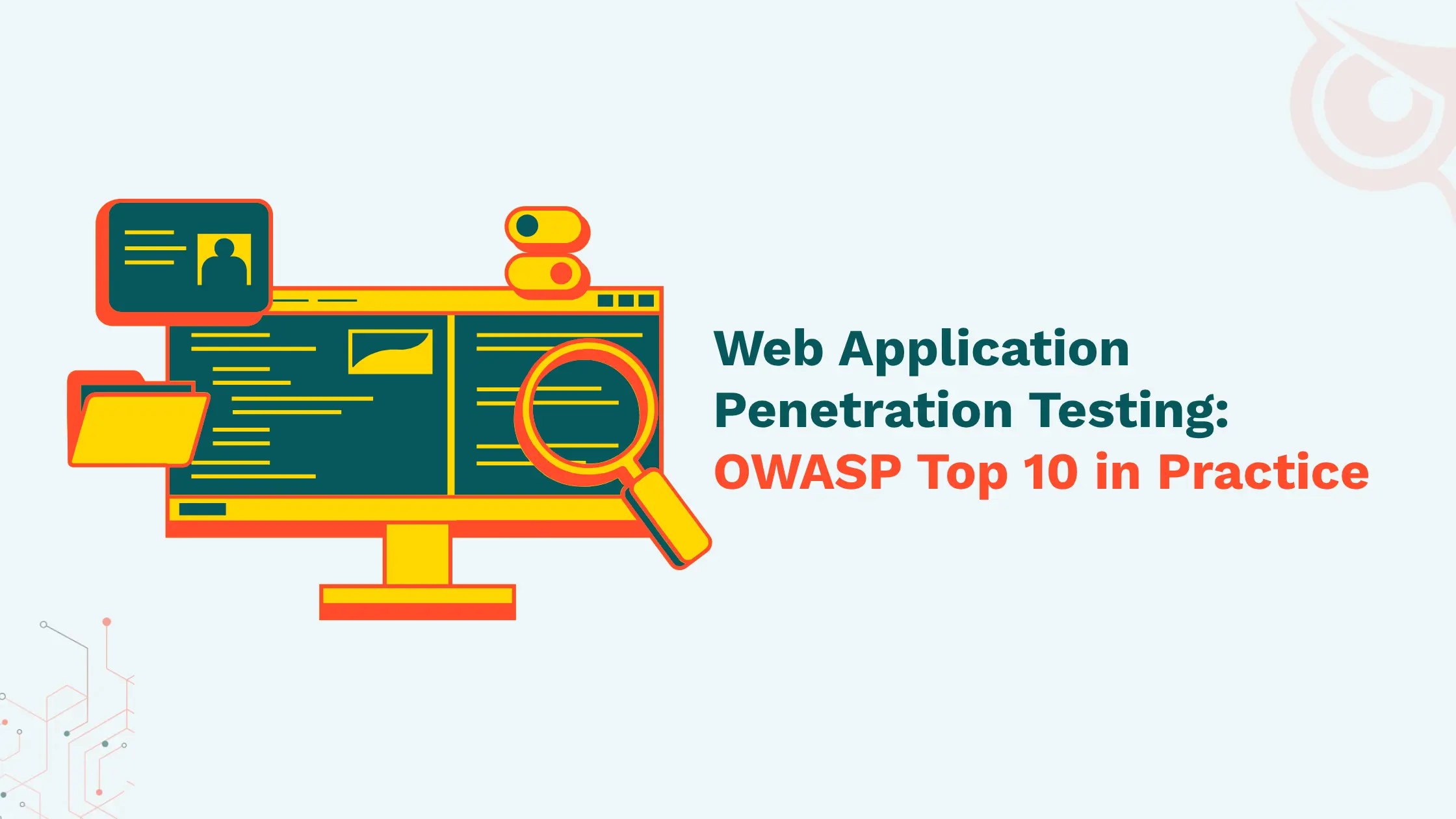
This is where web application penetration testing plays a vital role. It is a controlled security assessment in which security professionals simulate real-world cyberattacks to identify and validate vulnerabilities before malicious actors can exploit them.
A widely accepted framework for conducting these assessments is the OWASP Top 10. This industry-recognized standard highlights the most critical security risks affecting web applications.
It helps organizations focus on the vulnerabilities that are most likely to be exploited and provides practical guidance for improving application security.
In this guide, you'll learn what web application penetration testing involves, why it is essential for protecting modern applications, and how security professionals use the OWASP Top 10 to identify common vulnerabilities in real-world environments.
Web application penetration testing is a security assessment that evaluates a web application for vulnerabilities that attackers could exploit. During the test, security professionals simulate real-world cyberattacks to:
The goal is not only to find security issues but also to validate whether they are actually exploitable and provide recommendations to fix them before attackers can take advantage of them.
Web application penetration testing combines automated tools with manual testing techniques. This allows testers to uncover both common vulnerabilities and complex security flaws that may otherwise go unnoticed.
Although these terms are often used interchangeably, they serve different purposes.
1. A vulnerability scan is an automated process that checks an application for known security weaknesses, such as outdated software, missing security patches, or common misconfigurations. It is fast, repeatable, and useful for identifying potential risks.
However, vulnerability scanners cannot always determine whether a weakness is exploitable or understand the application's unique business processes.
2. In contrast, web application penetration testing goes a step further. Security experts manually verify vulnerabilities, attempt to exploit them in a controlled environment, and assess the real-world impact.
This approach helps uncover complex issues such as broken access control, business logic flaws, authentication weaknesses, and chained attack paths that automated scanners often miss.
In short, vulnerability scanning helps identify possible security issues, while penetration testing confirms which vulnerabilities pose real risks.
The primary objective of web application penetration testing is to identify and validate security vulnerabilities before they can be exploited by attackers. Beyond finding vulnerabilities, a penetration test helps organizations:
The Open Worldwide Application Security Project (OWASP) is a global, non-profit organization dedicated to improving software security. It provides free resources, tools, documentation, and best practices that help developers, security teams, and organizations build more secure applications.
Among its many projects, the OWASP Top 10 is the most well-known. It is a regularly updated awareness document that highlights the ten most critical security risks affecting web applications.
The list is created using data collected from security experts and organizations around the world, making it a trusted reference for modern application security.
The OWASP Top 10 is widely used because it focuses on the vulnerabilities that pose the greatest risk to web applications. It highlights the most common and impactful categories of vulnerabilities that organizations should address first.
Security professionals, developers, and compliance teams use the OWASP Top 10 because it:
The OWASP Top 10 and the Common Vulnerabilities and Exposures (CVE) database are both valuable security resources, but they serve different purposes.
The OWASP Top 10 is a list of broad vulnerability categories that commonly affect web applications. It helps organizations understand the types of security weaknesses they should look for during development, security reviews, and web application penetration testing.
A CVE, on the other hand, is a publicly disclosed record of a specific security vulnerability found in a particular software product or technology. Each vulnerability is assigned a unique CVE identifier, making it easier for security teams to track, discuss, and remediate known issues.
For example, Injection is a category in the OWASP Top 10, while an SQL injection vulnerability discovered in a specific web application or software product may receive its own unique CVE identifier if it is publicly disclosed.
In simple terms:
Together, these resources complement each other. The OWASP Top 10 provides guidance for assessing application security, while the CVE database helps organizations identify and address known vulnerabilities in the technologies they use.
Instead of testing random vulnerabilities, security professionals use these categories to focus on the most critical risks that commonly affect modern web applications.
During a penetration test, each category is evaluated using a combination of automated tools and manual testing techniques to determine whether vulnerabilities exist, how they can be exploited, and what impact they could have on the organization.
Below is an overview of the OWASP Top 10 categories and how they are assessed during web application penetration testing.
Broken Access Control occurs when users can access resources or perform actions beyond their intended permissions. It remains one of the most common and critical web application vulnerabilities because it can expose sensitive data and administrative functions.
Common Vulnerabilities
Testing Techniques
During web application penetration testing, testers:
Cryptographic failures occur when sensitive information is not properly protected through encryption. Weak or outdated cryptographic practices can expose passwords, payment information, and personal data.
Common Vulnerabilities
Testing Techniques
Security professionals assess:
Injection vulnerabilities occur when untrusted user input is interpreted as commands or queries by a backend system. Although modern frameworks have reduced their prevalence, injection attacks remain a major focus of web application penetration testing.
Common Types
SQL Injection: Allows attackers to manipulate database queries and retrieve, modify, or delete data.
NoSQL Injection: Targets NoSQL databases by manipulating application queries.
OS Command Injection: Executes operating system commands through vulnerable application inputs.
LDAP Injection: Manipulates LDAP queries to bypass authentication or retrieve directory information.
Testing Methodology
Penetration testers:
Unlike implementation bugs, insecure design results from weaknesses in the application's architecture or business processes. These issues cannot be fixed simply by patching code because they originate during the design phase.
Secure Design Principles
Security misconfigurations occur when applications, servers, cloud environments, or frameworks are deployed with insecure settings.
Common Vulnerabilities
Testing Techniques
Penetration testers evaluate:
Most modern applications rely heavily on third-party libraries, frameworks, and open-source packages. Outdated components can introduce known security vulnerabilities into otherwise secure applications.
Common Risks
Testing Techniques
Security professionals:
Authentication weaknesses allow attackers to impersonate legitimate users or compromise user accounts.
Common Vulnerabilities
Testing Techniques
Penetration testers evaluate:
Software integrity failures occur when applications cannot verify that software, updates, or dependencies come from trusted sources.
Common Vulnerabilities
Testing Techniques
Security assessments include:
Without proper logging and monitoring, organizations may not detect attacks until significant damage has already occurred.
Common Vulnerabilities
Testing Techniques
Penetration testers verify:
Server-Side Request Forgery (SSRF) occurs when an attacker tricks a server into making unintended requests to internal or external resources.
Common Risks
Testing Techniques
During web application penetration testing, testers:
However, effective web application penetration testing goes beyond these categories. Security professionals also assess API security testing, business logic flaws, and application-specific attack paths that may not fit neatly into the OWASP Top 10 but can still pose significant business risks.
Effective web application penetration testing goes beyond running automated tools or checking compliance requirements. It requires a thorough assessment of the application, its APIs, user workflows, and supporting infrastructure.
Below are some of the most common mistakes organizations make and how they can avoid them.
Automated vulnerability scanners are valuable for identifying common security issues, such as outdated software, missing security headers, and known vulnerabilities. However, they cannot replace manual penetration testing.
Scanners often struggle to identify complex attack paths, authorization issues, and vulnerabilities that require human judgment. They may also generate false positives or miss vulnerabilities that are unique to the application's design.
The best approach is to combine automated scanning with expert-led web application penetration testing to gain a more accurate understanding of your application's security.
Many organizations perform testing only as an anonymous user. While this helps identify externally accessible vulnerabilities, it does not evaluate the parts of the application that authenticated users can access.
Most business applications contain dashboards, account management features, administrative panels, and role-based functions that are only available after login. These areas often store sensitive data and perform critical business operations.
Authenticated testing allows security professionals to verify access controls, session management, privilege escalation risks, and user permissions across different roles, providing a much more complete security assessment.
Modern web applications rely heavily on APIs to exchange data between web clients, mobile apps, and third-party services. If APIs are not included in the security assessment, important vulnerabilities may remain undetected.
API security testing helps identify issues such as broken authentication, insecure authorization, excessive data exposure, improper input validation, and weak rate limiting.
Since APIs often provide direct access to application data and functionality, they should always be included as part of comprehensive web application penetration testing.
.webp)
Unlike technical vulnerabilities, business logic flaws result from weaknesses in the application's workflows or business rules. These issues are difficult for automated tools to detect because they require an understanding of how the application is intended to function.
For example, a user may be able to apply the same discount coupon multiple times, modify product prices during checkout, bypass payment steps, or complete actions in an unintended sequence.
While these actions may not exploit traditional software vulnerabilities, they can still lead to financial loss, fraud, or unauthorized access. Manual testing is essential for identifying business logic flaws and evaluating how real users interact with the application.
Waiting until an application is released before performing security testing increases both risk and remediation costs. Vulnerabilities discovered late in the development process often require significant code changes and may delay product releases.
Instead, organizations should integrate web application penetration testing and other security assessments throughout the Software Development Life Cycle (SDLC). Testing during development helps identify vulnerabilities earlier, making them easier and less expensive to fix.
Organizations often focus only on vulnerabilities classified as critical or high severity. While addressing these issues is important, medium-risk vulnerabilities should not be ignored.
Attackers frequently combine multiple medium-risk weaknesses to create a successful attack path. For example, a medium-risk information disclosure issue combined with weak access controls may eventually lead to unauthorized access to sensitive systems.
Prioritizing remediation based on business impact, exploitability, and the overall attack chain provides a more effective security strategy than relying on severity ratings alone.
Fixing a vulnerability is only part of the process. Organizations sometimes assume that a reported issue has been resolved without confirming the effectiveness of the fix.
After remediation, security teams should perform retesting to verify that:
Retesting provides confidence that remediation efforts are complete and helps maintain a strong security posture over time.
Web application penetration testing is one of the most effective ways to identify security weaknesses before attackers can exploit them. While automated tools can detect common vulnerabilities, they often miss complex issues such as business logic flaws, authentication weaknesses, and insecure API implementations.
A thorough assessment that combines manual expertise with automated testing provides deeper visibility into your application's real security risks.
Professional web application penetration testing can help you uncover hidden vulnerabilities before they become costly security incidents.
Our security experts combine manual testing with advanced automated techniques to identify real-world risks, provide clear remediation guidance, and validate fixes through retesting.
If you're ready to strengthen your application security, book a demo with our team to discuss your testing requirements and build a more resilient security posture.
Web application penetration testing is a controlled security assessment in which security professionals simulate real-world cyberattacks to identify and validate vulnerabilities in a web application. It helps organizations understand which security weaknesses are exploitable and provides recommendations to remediate them before attackers can take advantage of them.
Vulnerability scanning uses automated tools to detect known security issues, such as missing patches or misconfigurations. Penetration testing goes further by combining automated tools with manual testing to verify whether vulnerabilities are exploitable, assess their real-world impact, and identify complex issues like business logic flaws and broken access controls.
A comprehensive web application penetration test evaluates vulnerabilities such as the OWASP Top 10 security risks, broken access controls, injection attacks, authentication weaknesses, security misconfigurations, cryptographic failures, API security issues, business logic flaws, and other application-specific attack paths.
Organizations should perform web application penetration testing at least once a year and after significant application updates, infrastructure changes, or the introduction of new features. Regular testing helps identify new vulnerabilities, validate security controls, and maintain a strong security posture as applications evolve.
APIs often expose critical business functionality and sensitive data, making them a common target for attackers. Including APIs in a penetration test helps identify vulnerabilities such as broken authentication, insecure authorization, excessive data exposure, and improper input validation that could otherwise remain undetected.