September 24, 2026
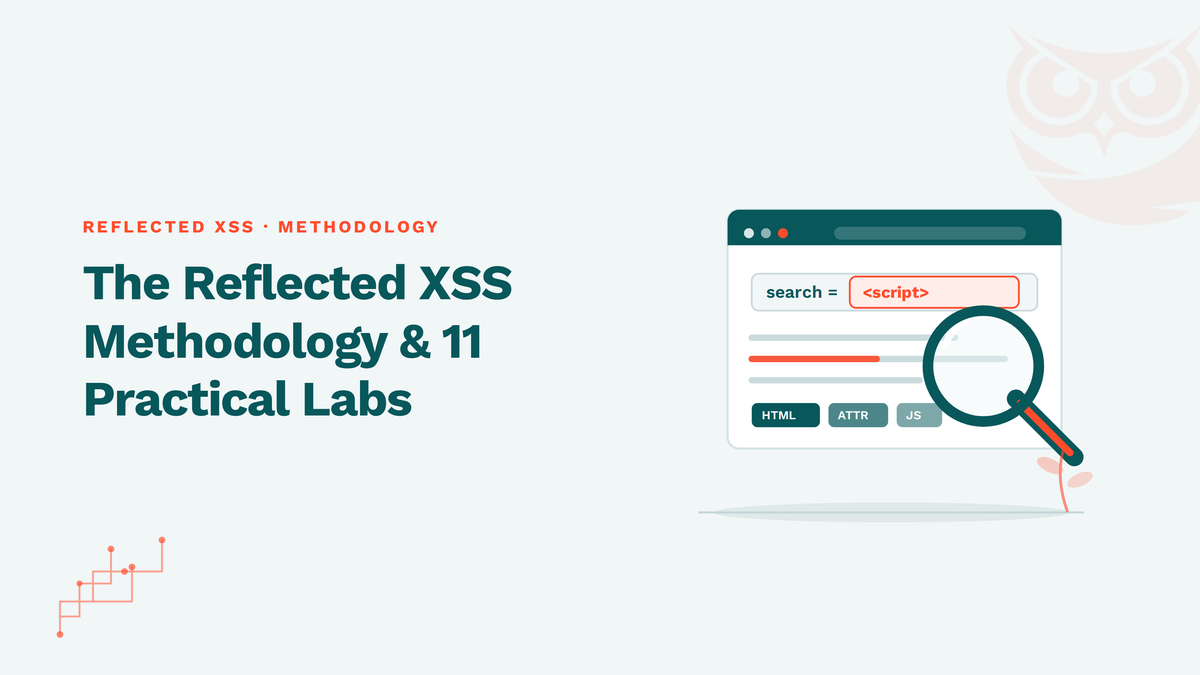
The Reflected XSS Methodology: 11 Labs Behind $5,000+ in Bounties and 80+ Pentests
The Reflected XSS Methodology: 11 Labs Behind $5,000+ in Bounties and 80+ Pentests
Salman Khan


Omair Manzoor is the Founder, CEO, and Chief Hacker of ioSENTRIX, a CREST-accredited cybersecurity firm. With 14+ years in offensive security, he has led penetration tests for Fortune 500 companies including engagements for Amazon, Bank of America, VISA, and the London Underground. His exploits are part of the Metasploit Framework and Immunity Canvas. Omair is a published researcher, conference keynote speaker (DOD, CISA, BSides), and technical reviewer for academic security textbooks.
Artificial intelligence systems are advancing at accelerated speed, and security risks are increasing proportionally. AI security in 2026 requires scalable protection methods, governance frameworks, and continuous vulnerability detection to prevent model corruption, and unauthorized access.
Enterprises leveraging structured security models can maintain reliability, compliance, and operational integrity as intelligent systems evolve.
This article outlines the key risks, protection mechanisms, and implementation strategies required to secure next-generation intelligent systems across enterprises, with ioSENTRIX positioned as a strategic enabler in building resilient AI environments.
AI security in 2026 refers to the protection of AI-based systems, models, data pipelines, and inference environments from cyber threats.
It includes model integrity controls, adversarial defenses, secure training practices, and continuous monitoring for manipulation attempts.
The scope covers LLMs, autonomous decision engines, agentic AI networks, and multimodal inference systems.
AI security involves three layers:
AI security matters because compromised models can leak data, make unsafe decisions, and trigger uncontrolled automated actions.
Enterprises depend on AI for fraud detection, authentication, forecasting, DevOps automation, and real-time decision support.
A single exploited inference endpoint can escalate into widespread network exposure. Key enterprise risks include:
According to Gartner projections, 40% of enterprise AI systems will experience at least one security incident by 2026, primarily due to lack of model hardening and insecure deployment pipelines.
Attackers target AI through poisoning, adversarial inference, prompt manipulation, and model extraction techniques.
The intent is to influence predictions, exfiltrate intellectual property, or modify autonomous behavior without detection.
Primary attack methods:
In 2026, advanced attacks also include:
An AI security architecture must include model access control, training data validation, adversarial defense layers, and runtime monitoring.
Organizations must establish policies that govern how models learn, infer, and interact with internal and external data flows.
.webp)
A secure AI deployment must also include red-team testing, supply-chain auditing, and guardrail policy enforcement throughout CI/CD.
Enterprises can secure autonomous AI by enforcing input validation, model output monitoring, privilege boundaries, and rollback mechanisms.
Agentic AI must not operate with unrestricted system authority. Recommended controls:
A secure environment should disable high-risk capabilities unless validated by human oversight or defined policy rules.
AI security will progress toward autonomous defense, where AI protects AI through self-monitoring, anomaly detection, and model-to-model verification.
Enterprises will adopt continuous pentesting, model watermarking, and automated patching to ensure resilience against fast-moving attack vectors.
Expected advancements:
By 2027–2029, AI systems will integrate zero-trust AI identity, making every inference request policy-verified and behavior-tracked.
AI systems in 2026 require structured, measurable, and continuously validated security controls. Safeguarding intelligent models demands strong governance, robust adversarial defenses, and continuous threat monitoring across every operational layer.
Enterprises partnering with ioSENTRIX gain access to mature AI risk-management practices that support secure deployment, threat resilience, and incident-ready infrastructures.
Identify model manipulation risks, insecure pipelines, and inference exposure with ioSENTRIX’s enterprise-grade AI security testing and governance frameworks.
Contact an AI Security Expert