September 24, 2026
The Reflected XSS Methodology: 11 Labs Behind $5,000+ in Bounties and 80+ Pentests
The Reflected XSS Methodology: 11 Labs Behind $5,000+ in Bounties and 80+ Pentests

Salman Khan


Fiza Nadeem is an SEO content writer at ioSENTRIX with 2.5+ years of experience in content writing, copywriting, and SEO.
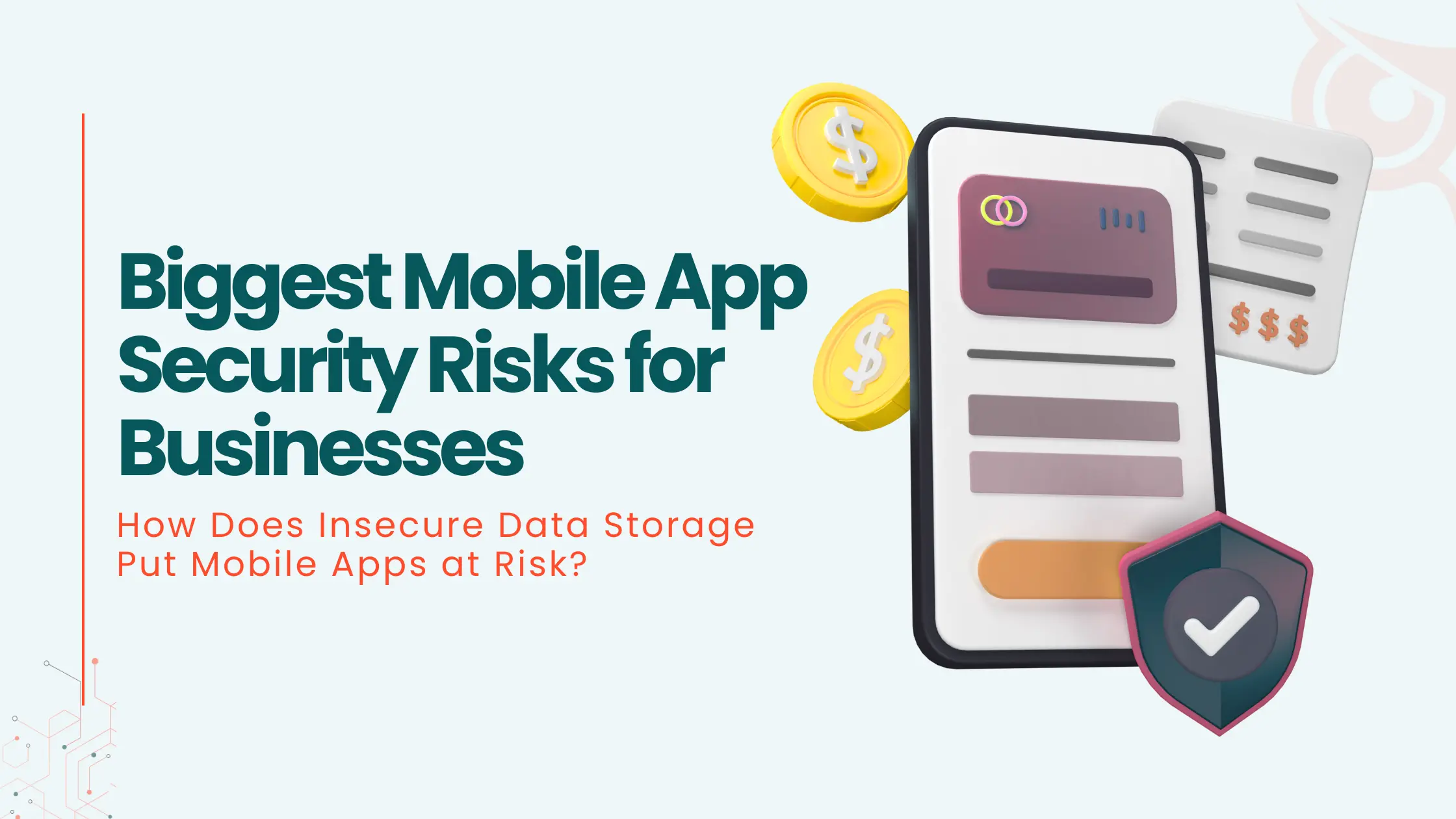
Mobile app security risks directly impact revenue, reputation, and regulatory compliance for modern businesses.
According to IBM’s 2024 Cost of a Data Breach Report, the average mobile-related data breach costs USD 4.45 million, making mobile applications a primary attack surface for cybercriminals.
Organizations rely on mobile apps for payments, authentication, and customer engagement. Weak security controls expose sensitive data, APIs, and backend systems to exploitation, leading to financial and legal consequences.
Businesses must address mobile app risks using structured application security strategies aligned with evolving threat landscapes.
Mobile app security risks are vulnerabilities that allow attackers to access, manipulate, or exfiltrate sensitive data. These risks emerge from insecure code, misconfigured APIs, weak authentication, and unsafe third-party integrations.
Attackers exploit these weaknesses to perform credential theft, data leakage, financial fraud, and account takeovers across Android and iOS ecosystems.
The biggest mobile app security risks include insecure data storage, weak authentication, API abuse, and third-party vulnerabilities. Each risk impacts confidentiality, integrity, and availability of business-critical systems.
Learn more about data exposure patterns in modern systems in this guide on data leakage in AI fine-tuning.
Weak authentication allows attackers to bypass login mechanisms and hijack accounts. Single-factor authentication and predictable password policies increase breach probability.
According to Verizon DBIR, over 49% of breaches involve stolen credentials, making authentication a primary attack vector.
Mobile apps lacking MFA and secure session handling amplify this risk. Strong authentication requires MFA, biometric validation, and secure token lifecycle management.
Insecure APIs allow attackers to access backend systems without proper authorization. APIs often expose excessive data or lack rate limiting and object-level authorization.
OWASP reports that API vulnerabilities now rank among the top 3 mobile attack vectors. Exploited APIs enable data scraping, privilege escalation, and service disruption. Threat modeling helps identify API abuse paths early.
Third-party SDKs introduce inherited vulnerabilities outside direct developer control. Advertising SDKs, analytics libraries, and payment modules often request excessive permissions.
Research by Symantec shows 62% of mobile apps contain at least one vulnerable third-party component. Compromised SDKs enable data exfiltration and supply-chain attacks.
Mobile app penetration testing identifies exploitable vulnerabilities before attackers do. Testing simulates real attack scenarios against application logic, APIs, and backend integrations.
Organizations using regular testing reduce breach likelihood by over 60%, according to SANS research. Testing uncovers business logic flaws missed by automated scanners.
Explore enterprise-grade testing services for mobile platforms with mobile application penetration testing.
Threat modeling proactively identifies attack paths during application design. It evaluates assets, threat actors, trust boundaries, and abuse cases.
Microsoft research confirms early threat modeling reduces security defects by over 70%. This approach minimizes costly post-deployment fixes.
Businesses reduce mobile app security risks by implementing secure development, threat modeling, penetration testing, and continuous monitoring.
A proactive AppSec strategy minimizes breach likelihood, protects customer trust, and ensures regulatory compliance across evolving mobile ecosystems.
For tailored mobile security solutions, explore application security services or contact ioSENTRIX today.
The most common mobile app security risks include insecure data storage, weak authentication mechanisms, and vulnerable APIs. Among these, credential theft due to weak authentication is one of the leading causes of breaches.
Mobile app security breaches can result in significant financial losses, including regulatory fines, legal costs, remediation expenses, and reputational damage. According to industry reports, the average cost of a breach exceeds millions of dollars.
Both Android and iOS apps face security risks, but Android apps are often considered more exposed due to device fragmentation and open ecosystem flexibility. However, vulnerabilities ultimately depend on how securely the app is developed and maintained.
Businesses can strengthen authentication by implementing multi-factor authentication (MFA), biometric verification, strong password policies, and secure session management practices.
Mobile apps should undergo security testing regularly—ideally during development, before deployment, and continuously after release. Periodic penetration testing and ongoing monitoring help identify and fix emerging vulnerabilities early.