
October 9, 2026
How Much Does an AI Penetration Test Cost?
How Much Does an AI Penetration Test Cost?

Omair


Fiza Nadeem is an SEO content writer at ioSENTRIX with 2.5+ years of experience in content writing, copywriting, and SEO.
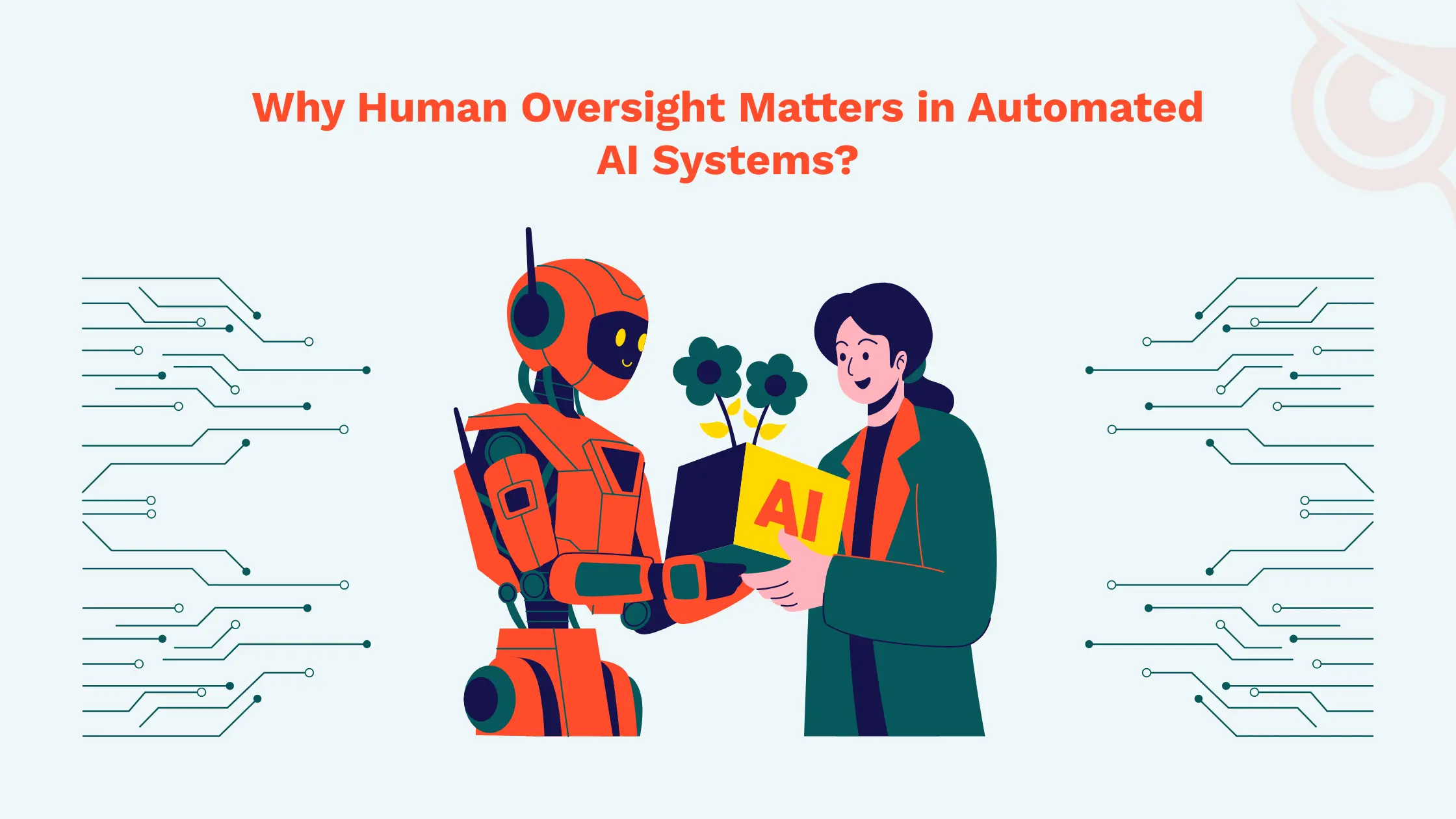
Automated AI systems are transforming enterprises, enabling decision-making, process automation, and predictive analytics. While AI improves efficiency, it introduces unique security, compliance, and operational risks.
According to a 2025 PwC report, 57% of AI-related incidents involved errors preventable with human oversight.
CISOs must implement hybrid governance to validate outputs, enforce policies, and maintain compliance across AI workflows. Human oversight ensures accountability, mitigates risk, and complements AI automation.
Automated AI lacks contextual understanding and ethical reasoning. It can misinterpret edge cases, misapply rules, or produce unsafe outputs.
Human oversight allows teams to identify anomalies, review critical outputs, and intervene before errors propagate. Even advanced AI models require supervision to prevent costly mistakes.
Fully automated AI systems face multiple risks that human oversight helps mitigate:
Learn more about security flaws in AI architecture.
.webp)
Human oversight validates outputs, ensuring compliance with organizational policies. Humans review flagged outputs, validate high-risk decisions, and provide feedback for model retraining.
This hybrid approach integrates AI efficiency with human judgment, reducing errors and maintaining compliance. See AI design review: LLM security and compliance for guidance.
Threat modeling identifies potential misuse scenarios. Humans map attack vectors, evaluate operational context, and plan mitigations AI alone cannot anticipate.
Key considerations include:
Learn methodology in threat modeling in AI: LLM.
Insurers increasingly require documented human oversight for AI-driven systems. Continuous monitoring, review workflows, and audit logs reduce financial exposure.
Organizations must maintain documented AI oversight processes to qualify for cyber insurance coverage, mitigating risk from potential AI failures or breaches.
Humans detect nuanced AI errors, including bias, ethical violations, or unsafe instructions. Automated moderation alone may miss these edge cases.
Two key best practices:
Embed oversight early in the AI lifecycle to reduce costly retroactive fixes. Include checkpoints during design, testing, and deployment to ensure accountability.
Benefits include:
Automation accelerates workflows, but human oversight balances speed with safety. Critical decisions, sensitive outputs, and regulatory obligations require human checkpoints.
Hybrid workflows optimize performance without sacrificing compliance. Learn more in human-machine hybrid penetration testing.
ioSENTRIX provides platforms and services that integrate:
The solution ensures AI outputs, prompt handling, and decision workflows are continuously monitored. Schedule a consultation: Book Demo.
Fully automated AI systems enhance productivity but cannot replace human judgment. CISOs must implement human oversight alongside automated security, testing, and moderation frameworks.
ioSENTRIX ensures hybrid workflows deliver continuous monitoring, prompt/output validation, and actionable risk intelligence, maintaining enterprise AI security and compliance.