AI Security/AI Assurance & Control Validation
AI Assurance & Control Validation

Prove your AI controls actually work with evidence, not assumptions

Your policy says employees can’t leak customer data to public AI. Has anyone tested it? We discover the AI really in use across your business, test whether your controls hold across every path, and show you exactly where policy and reality diverge.

  • Shadow- and embedded-AI discovery: what AI is really in use
  • Synthetic-data leakage testing across every path an employee could use
  • Evidence-graded control scoring (E0–E3), not opinions
  • A board-ready assurance roadmap you can action in 30/60/90 days
The credentials behind every engagement
CREST-accredited for penetration testingISO/IEC 27001 certifiedSOC 2 Type 2 attested
2026 CyberSecurity Breakthrough Awards winnerG2 High Performer, Fall 2026
Penetration Testing Solution of the Year2026 CyberSecurity Breakthrough Awards

Reviewed by Omair Manzoor, Founder & CEO, ioSENTRIX · Updated

Key terms: What is shadow IT? · What is data leakage? · What is governance?

Trusted by security teams at
The short answer

What is AI control validation?

AI control validation is testing whether the controls in your AI-use policy actually hold in practice, not whether they exist on paper. It discovers the AI really in use, proves with synthetic data whether sensitive data can slip through on each path an employee could use, and grades each control on the strength of the evidence behind it.

Governance and policy reviews ask whether a control exists. AI assurance tests whether it works: instead of a questionnaire, we run safe synthetic data across paste, upload, browser, desktop and API, so your assurance is backed by a passing technical test, not an interview. See how this fits a wider AI security assessment.

At ioSENTRIX, AI control validation is run by offensive-security testers at a CREST-accredited firm, using synthetic data only, with every control graded E0–E3 and mapped to the NIST AI RMF and ISO/IEC 42001.

Control validation fits when

  • You have an AI-use policy and no evidence that it holds
  • Your board or auditors want proof, not a maturity score
  • AI is switched on inside SaaS you already approved
  • Employees use personal AI accounts on work data
Policy versus reality

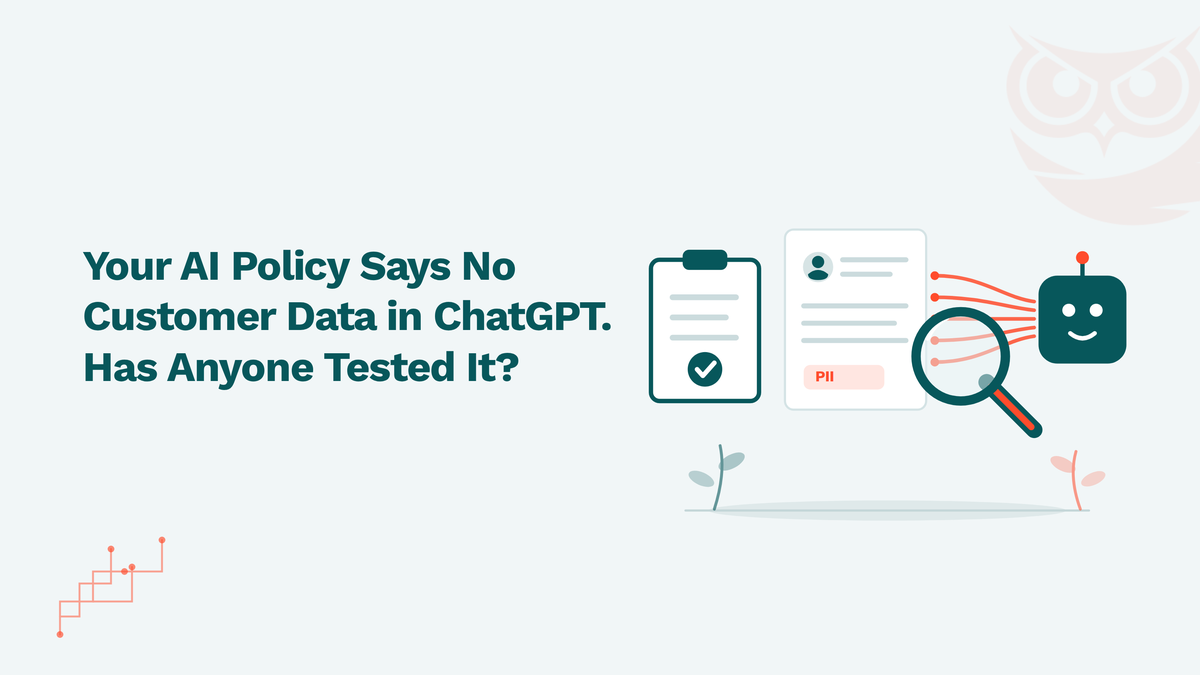
“Your AI policy says no customer data in ChatGPT. Has anyone actually tested that?”

In almost every environment we assess, the honest answer is no. And when we test it, the control holds on one path and fails on another. We show you which, with evidence.

Exhibit 1 · Illustrative
One AI-use policy, tested path by path with a synthetic customer record
ioSENTRIX
On paper: compliantPolicy published, DLP and web filter in place, questionnaire answered “yes”.
Tested: holds on 2 of 6 pathsThe same synthetic record reached a public AI tool on four paths.
Swipe sideways to see the full exhibit →
Path an employee could useControl relied onTested resultEvidence
Paste into a public chatbotEnterprise account, managed browserDLP / SSE inline inspectionHeldE3 · blocked and logged
Paste into a public chatbotPersonal account, same browserDLP / SSE inline inspectionFailedCanary reached the tool
File upload to a public AI toolEnterprise accountCASB file policyHeldE3 · upload blocked
AI browser extensionApproved extension with built-in AIWeb filterFailedPage content sent to vendor
AI feature inside approved SaaSEmbedded assistant switched onVendor reviewFailedNo control on this path
API call from a developer laptopPersonal API keyEgress monitoringPartialSent, alert fired late
Source: Illustrative output based on the ioSENTRIX assurance report format. Synthetic data, not client data.
One policy, many paths

A control that holds on one path can fail on the next. We test each path an employee could use.

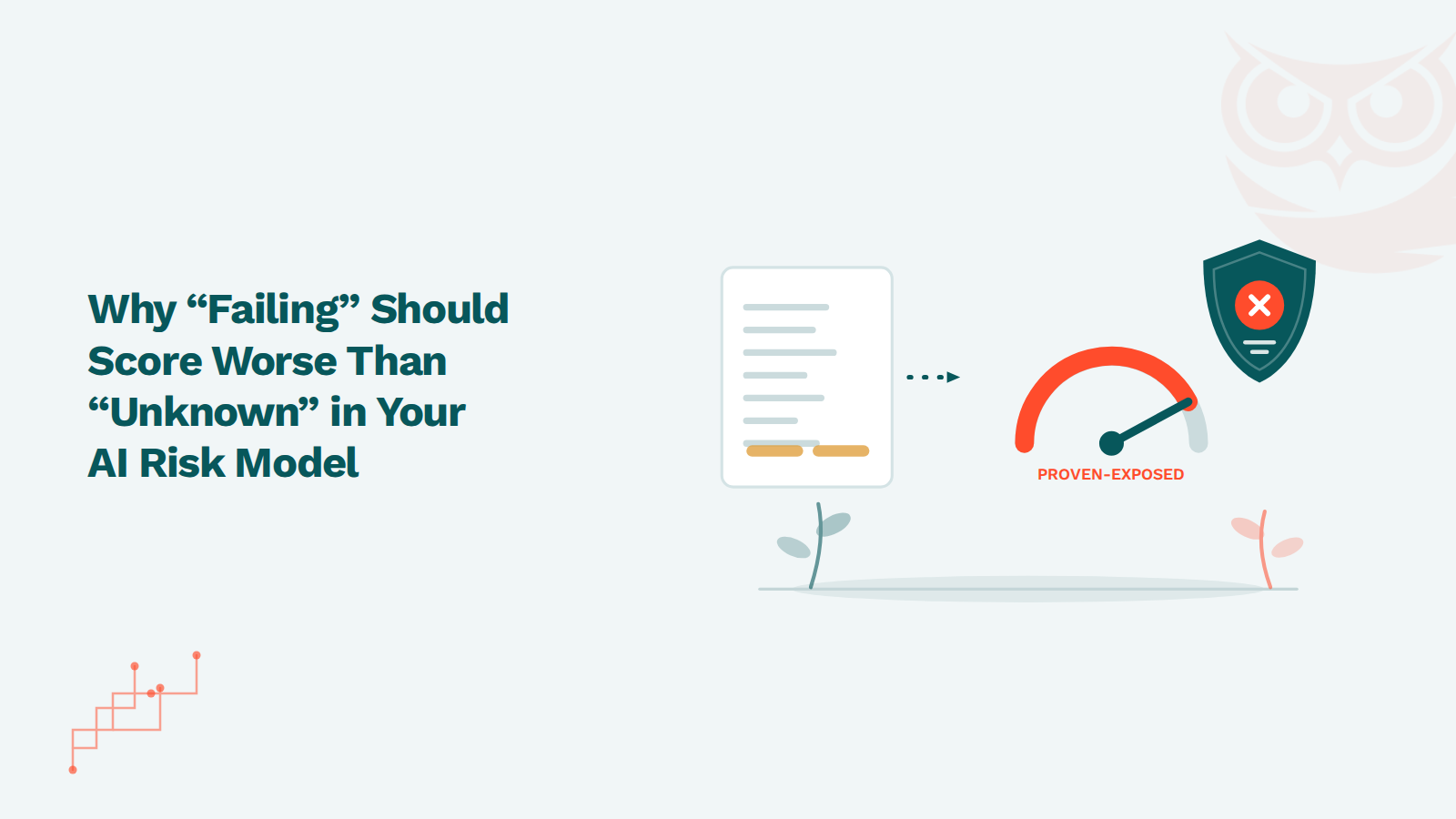
Proven-exposed stays visible

Failed paths are surfaced, never averaged into a green maturity score.

Usually fixable

Most gaps close with tools you already own, then a re-test proves the fix held.

One assessment, four answers

We don’t ask if you have a policy. We test whether it holds.

Governance tells you a control exists. We prove whether it works, using safe synthetic data across every path a real employee could use.

Discover

AI and shadow-AI discovery

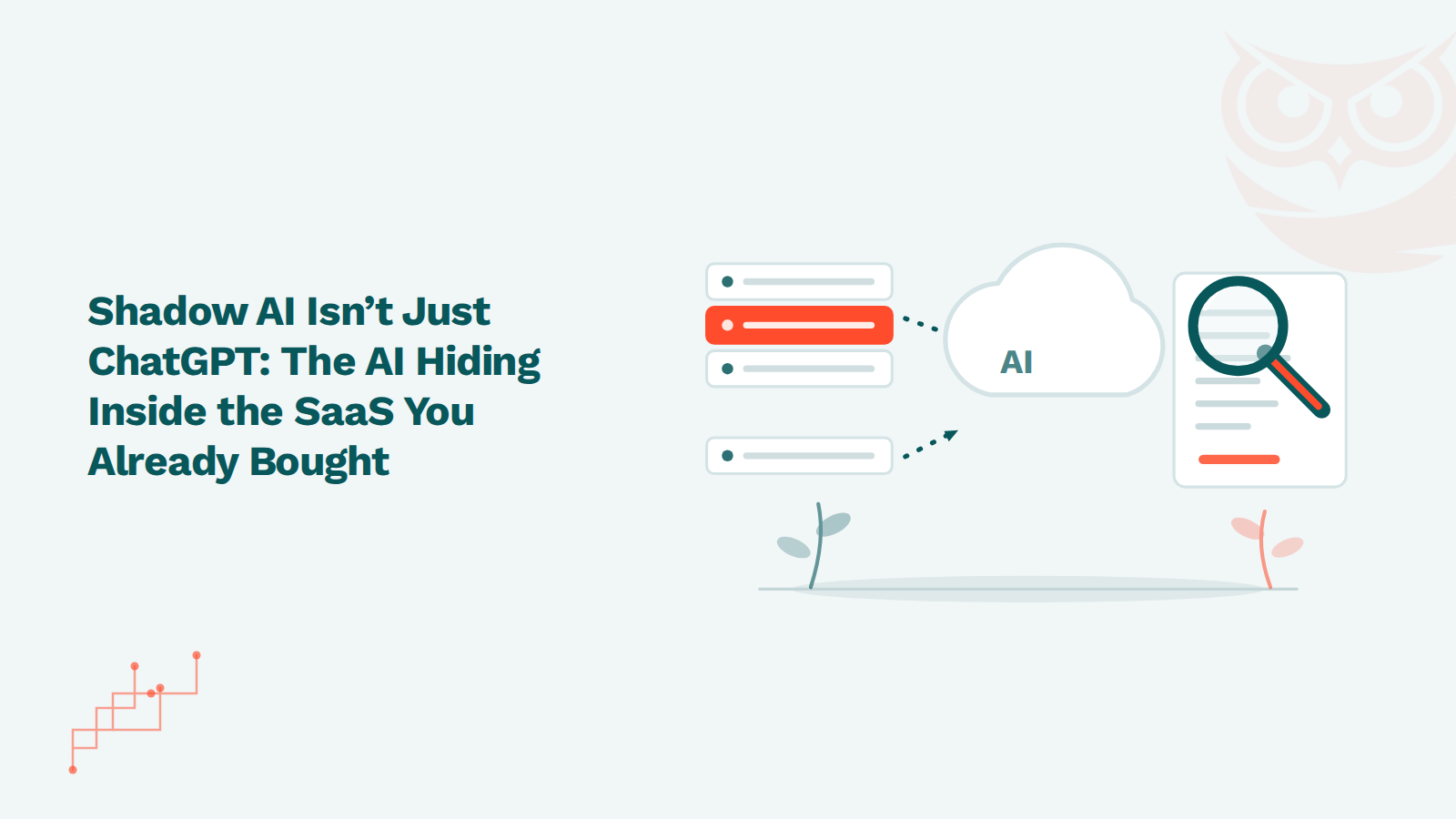
Find the AI actually in use: approved, unapproved, and hidden inside the SaaS you already bought.

  • Sanctioned vs. shadow AI
  • Embedded AI in existing SaaS
  • Personal-account and BYOD usage
  • AI browser extensions and APIs
  • AI inventory confidence rating
Leakage

Data-leakage validation

Test whether sensitive data can actually reach AI across paste, upload, browser and API, with synthetic data.

  • Text, file-upload and API paths
  • Personal vs. enterprise accounts
  • DLP / CASB / SSE enforcement
  • Source code and secrets exposure
  • Synthetic-canary method (no real data)
Controls

Control and policy validation

Grade every important control on the strength of evidence, and flag the ones that only exist on paper.

  • Policy-vs-reality gap analysis
  • Identity and access checks
  • Monitoring and detection chain
  • Evidence-based scoring (E0–E3)
  • Prioritized, proven findings
Report

Assurance report and roadmap

A board-ready picture of what works, what fails, and what to fix first, not a vanity maturity score.

  • State distribution, not one number
  • Proven-exposed findings surfaced
  • 30 / 60 / 90-day roadmap
  • Usually fixable with tools you own
  • Re-test to close the gaps
Methodology

How we validate: example checks

A sample of the checks in a typical engagement. The AI your teams use decides the full list.

Discover

Shadow and embedded AI

We find AI tools nobody approved, and AI features switched on inside SaaS you already pay for.

Leakage

Synthetic canaries on every path

We send uniquely-marked fake records through paste, upload, browser, desktop and API, and record where they arrive.

Accounts

Personal vs. enterprise accounts

We repeat each test from personal and enterprise accounts, because a control often covers only one.

Control

DLP, CASB and SSE enforcement

We test whether the enforcement your policy relies on blocks the data, not just whether it is deployed.

Control

Source code and secrets

We test whether synthetic secrets and code can reach AI coding tools and assistants.

Detect

Monitoring and detection chain

We check whether your logging and alerting saw each attempt, and how fast someone was told.

Sample finding

What a finding looks like in our report

An illustrative example in our report format. Synthetic data, not client data.

Finding 01 · IllustrativeHigh

Control rated “in place” held on enterprise accounts but failed on personal accounts: a synthetic customer record reached a public AI tool

Evidence level E3 · NIST AI RMF MANAGE · OWASP LLM02 Sensitive Information Disclosure

What we found

The policy bans customer data in public AI tools and DLP inspects enterprise sessions. Pasting a uniquely-marked synthetic record from a personal account in the same managed browser was not inspected, and the record reached the tool.

Impact

Customer data can leave the organization on a path the control was believed to cover.

How to fix it

Restrict personal-account sign-in to AI tools through the controls you already own, extend inspection to those sessions, and re-test the path.
What you get

What the assessment delivers

Not a policy review. Proof of whether sensitive data can actually reach AI, and what to fix first.

1

A map of the AI really in use

Shadow and embedded AI across paste, upload, browser, desktop and API: discovered, not assumed.

2

Evidence-graded control scores

Every control graded E0–E3 on the strength of the evidence behind it. A confident interview can’t earn a high score; only a passing technical test can.

3

A board-ready assurance roadmap

A 30/60/90 plan you can usually action with tools you already own, plus a re-test to verify the fixes held.

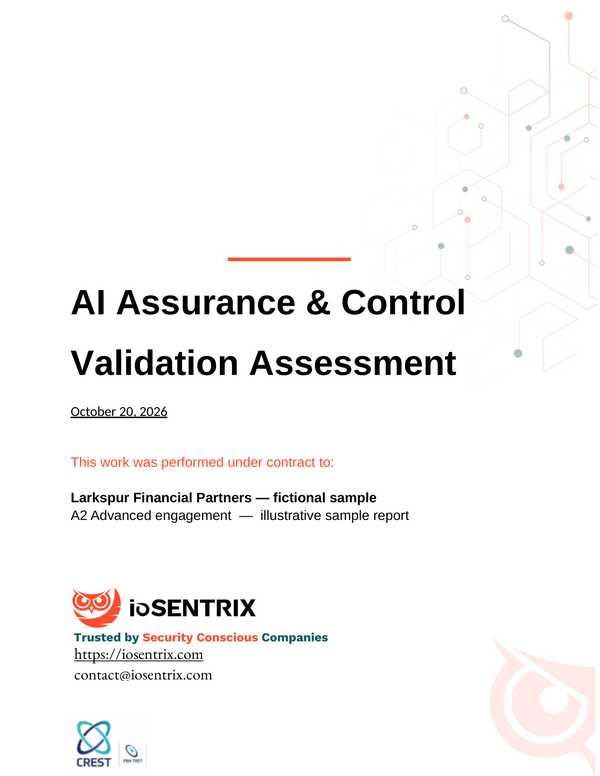
ioSENTRIX AI Assurance and Control Validation sample report cover

See a sample assurance report

Evidence-graded control scores, proven-exposed findings and a 30/60/90 roadmap, in the format your board will read.

Download the sample report (PDF) →
Verified reviews

What security leaders say about working with us

★★★★★
“Unlike other providers, Omair and his team truly dive deep into our infrastructure, delivering findings that go well beyond the surface level. Communication is direct and seamless.”
Jesus B.
Cybersecurity Manager, Banking
Verified G2 review ↗
★★★★★
“We were impressed with ioSENTRIX’s ability to independently validate the security of our customer-facing product.”
Zeehasham R.
Data Scientist, Security Operations · Fortune 500 insurer
Verified Clutch review ↗
★★★★★
“The team at ioSENTRIX is professional and highly skilled at their craft.”
Awwab A.
SVP, Chief Information Security Officer
Verified G2 review ↗
How it works

From policy to proof

A structured, repeatable method with evidence at every step.

01

Discover

We find the AI really in use (sanctioned, shadow and embedded) across every path your employees can reach.

Start
02

Map, tier and baseline

We map each AI use to the data it can touch, tier the risk, and baseline the controls you have today.

Early
03

Validate with synthetic data

We test whether sensitive data can actually reach AI on each path, using uniquely-marked synthetic records, never your real data.

Most of the engagement
04

Assure and re-test

Evidence-graded scores, a board-ready roadmap, and a re-test to verify the fixes held.

At close
Discover → map, tier and baseline → validate with synthetic data → assure and re-test (about 2 weeks)
Why ioSENTRIX

Governance firms ask. We test.

We’re an offensive-security firm. That’s what lets us do more than review your AI governance on paper: we prove whether the controls actually hold.

Built on offensive security

We test controls, we don’t survey them

Governance firms ask whether a control exists; we prove whether it works, using synthetic data across paste, file upload, browser, desktop and API, plus personal vs. enterprise accounts.

Synthetic-data safe

Your real data is never touched

We test with synthetic, uniquely-marked records: fake PII, PHI, secrets and source code. Your real data never leaves your environment or reaches ours.

Prove, don’t assert

Evidence levels, not opinions

Every control is graded E0–E3 on the strength of its evidence. Proven-exposed gaps are surfaced, never averaged away, so the board sees reality, not a green dashboard.

  • Offensive-security heritage: we validate, not just interview
  • Evidence over questionnaires: “prove, don’t assert”
  • Synthetic data only: we never ingest your real PII, PHI or secrets
  • Independent and vendor-neutral: we assure the stack you already own
  • Fast, fixed-scope engagements, from a two-week baseline
  • CREST-accredited, ISO 27001 certified, SOC 2 Type 2 attested
Scope

What affects the scope of an AI assurance engagement

Engagements are quoted on effort, in writing, before work starts. These are the decisions that move the scope.

What moves the scope

  1. 01How many business units and user groups are in scope
  2. 02Which paths are tested: paste, upload, browser, desktop, API
  3. 03How many controls are validated rather than reviewed
  4. 04Whether personal-account and BYOD use is in scope
  5. 05The frameworks you need results mapped to
Read: AI data leakage testing: has anyone tested your AI policy? →

What we need from you to start

  • Your AI-use and acceptable-use policies
  • A list of known AI tools and vendors, even if incomplete
  • The DLP, CASB or SSE controls your policy relies on
  • Test accounts and a contact in security or IT
Book an AI exposure check
Proof, not promises

AI systems we have already tested

A real engagement, described without the client’s name.

Case study

Fortune 500 financial services: AI/ML threat model across AWS and Azure

We threat-modeled the client’s AI estate — RAG pipelines, LLM orchestration layers and ML inference workflows — using STRIDE, NIST SP 800-30 and the NVIDIA AI Red Team framework.

Read the case study →
30+
AI components reviewed across AWS and Azure
13
threats identified and mapped
5
high-severity threats in RAG, orchestration and inference
Clients: Fortune 100, financial services, insurance and SaaS. Engagements: 2 weeks to 4 months, quoted on effort.
RAG systemsCustom LLM pipelines & trainingChatbotsOrganization-wide AI enablementAI features in SaaS productsMCP testing
Track record

Numbers you can check

Ratings you can verify on G2 and Clutch.

G2
4.9 / 5
on G2 from 12 verified reviews
Clutch
5.0 / 5
on Clutch, Premier Verified
2017
founded; CREST-accredited, ISO 27001 certified, SOC 2 Type 2 attested
Independently verified

Credentials held by the firm

Every engagement runs inside a company whose methods and own security are checked by outside bodies.

CREST-accredited for penetration testing

CREST-accredited for penetration testing

CREST assesses the firm's testing methodology, quality assurance and handling of client data.

View our CREST listing →
SOC 2 Type 2 attested

SOC 2 Type 2 attested

An independent auditor tested our own security controls over time.

Request the SOC 2 report →
ISO/IEC 27001 certified

ISO/IEC 27001 certified

Our information security management system is certified to ISO/IEC 27001.

View in our trust center →
2026 CyberSecurity Breakthrough Awards winnerG2 High Performer, Fall 2026

Recognized independently

Penetration Testing Solution of the Year, 2026 CyberSecurity Breakthrough Awards. G2 High Performer, Fall 2026.

Founded in 2017.

For your buying team

Everything your reviewers will ask for

Security, finance and procurement each need something different. Forward this page, or pull what each reviewer needs.

For security

Sample report

See exactly what you get: evidence-graded control scores, proven-exposed findings and a 30/60/90 roadmap.

Download the sample report (PDF) →
For vendor risk

Trust center

Our SOC 2 Type 2 report and security documentation for your vendor review.

Open the trust center →
For procurement

Procurement pack

Master services agreement, sample statement of work, certificate of insurance and W-9.

Request the procurement pack →
For your team

Share this page

Send the link to the people who need to sign off.

Who you work with

Who does the testing

Offensive security engineers run the tests and write up the findings, so the person who found an issue explains it to your team.

Certified testers

Each tester holds one or more of OSCP, OSWE, OSCE, CISSP, CISA or AWS security certifications.

Accredited firm

ioSENTRIX is CREST-accredited for penetration testing, ISO/IEC 27001 certified and SOC 2 Type 2 attested.

Since 2017

Founded in 2017, with offensive security work for Fortune 100, financial services, insurance and SaaS companies.

Want evidence of which AI controls actually hold?

A senior engineer replies within 1 business day · no sales pitch

Book an AI exposure check
Standards

AI standards and frameworks we map to

◆NIST AI RMF◆ISO/IEC 42001◆OWASP Top 10 for LLM Applications◆OWASP Top 10 for Agentic Applications◆MITRE ATLAS◆EU AI Act◆SOC 2
FAQ

Frequently asked questions

How is this different from AI governance or a policy review?

Governance and policy reviews ask whether a control exists; we test whether it works. Instead of a questionnaire, we run safe synthetic data across paste, upload, browser, desktop and API, so your assurance is backed by a passing technical test, not an interview.

Is our real data safe during the assessment?

Yes. We test with synthetic, uniquely-marked records: fake PII, PHI, secrets and source code. Your real data never leaves your environment or reaches ours.

What is shadow AI, and do you find it?

Shadow AI is the AI tools your employees use without IT’s knowledge or approval. Discovery is the first step of the assessment: we surface sanctioned, shadow and embedded AI across every path before we test whether sensitive data can reach it. Read shadow AI discovery: the AI inside SaaS you approved.

What do the E0–E3 evidence levels mean?

Every control is graded on the strength of the evidence behind it: E0 (no evidence) through E3 (a passing technical test). A confident interview can’t earn a high score; only a passing test can. Proven-exposed gaps are surfaced, never averaged away.

Which AI frameworks do you map to?

NIST AI RMF, ISO/IEC 42001, the OWASP LLM Top 10 and Agentic guidance, MITRE ATLAS, the EU AI Act and SOC 2, so your results line up with what auditors, boards and enterprise customers reference. If you are preparing for certification, see our ISO 42001 readiness service.

How long does the assessment take?

A focused baseline takes about two weeks: what AI is really in use, which controls hold, which fail, and a 30/60/90 plan you can usually action with tools you already own.

How is this different from an AI security assessment?

An AI security assessment reviews the AI you build and buy: architecture, threat models and the controls around them. AI assurance and control validation focuses on whether your AI-use controls hold in practice: what AI is really in use, and whether sensitive data can reach it.

Ready when you are

Find out if your AI controls actually hold

Book a short AI exposure check and we’ll show you what a full assessment would surface, and where you’re most likely exposed today.

Synthetic data only · CREST-accredited · ISO 27001 · SOC 2 Type 2 · Re-test to verify fixes